
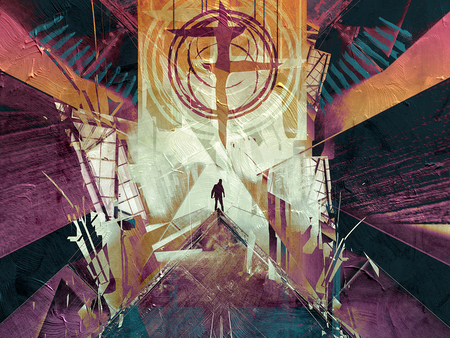
There comes a point in every band’s evolution when the question is no longer who are we? but what are we trying to say?On their third full-length album, The Rent That We All Pay, Portland hard-rock outfit Floodfall finally sound like a band that knows the answer.
Built on towering guitars, cinematic production, and lyrics that wrestle with history, memory, technology, and human connection, The Rent That We All Pay is an album that feels less interested in escapism than confrontation. These songs stare directly into the uncertainties of modern life and dare listeners to do the same.
Recorded at Top Floor Studios in Gothenburg, Sweden, with longtime collaborator Jakob Herrmann, the album benefits from a rare combination of American songwriting grit and Scandinavian precision. The result is a record that sounds massive without becoming bloated, polished without losing its edge. Every riff lands with purpose. Every chorus feels earned.
Opener “Immortals Die” sets the tone with a blunt reminder that every empire eventually falls. It’s a thunderous statement piece, equal parts warning and prophecy. From there, Floodfall expands its lens. “89 and 24” transforms personal memories of natural disasters into a meditation on resilience. “Satellites” drifts through emotional isolation with surprising vulnerability, while “Paradise” dismantles nostalgia’s comforting lies with one of the album’s sharpest lyrical concepts.
The album’s middle stretch is particularly strong. “Fifteen Miles” turns a drive through Norway’s Laerdal Tunnel into an almost spiritual experience, while “Watching” channels contemporary anxieties about surveillance and perception into a tense, muscular rocker that feels frighteningly current. Elsewhere, “Last Horizon” captures the romantic loneliness of endless highways and fading sunsets, proving Floodfall are just as effective when they slow down and let atmosphere do the heavy lifting.
What separates The Rent That We All Pay from many modern hard-rock releases is its willingness to embrace complexity. These aren’t songs built around simple villains and heroes. Even the album’s closing pair, “This Wall” and “A Thousand Years Without You,” drawn from the band’s larger Scary Monsters universe, explore sacrifice, regret, and love through characters forced to live with impossible decisions. The emotional weight feels genuine because the band refuses easy answers.
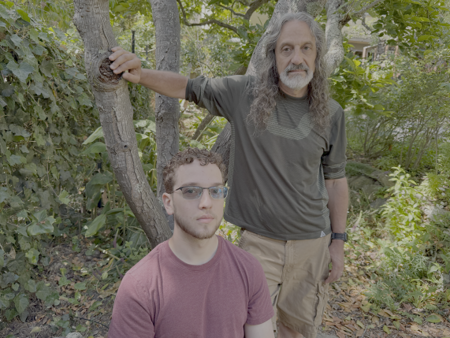
Musically, Floodfall have never sounded more focused. The years of lineup changes and experimentation that marked earlier chapters of the band’s history seem to have crystallized into a singular identity. The guitars are heavier, the arrangements sharper, and the performances more confident than ever. Rather than chasing trends, Floodfall have doubled down on what makes them unique: intelligent songwriting wrapped in stadium-sized hard rock.
The album’s title ultimately reveals its central thesis. Whether it’s the cost of ambition, the burden of memory, the consequences of technology, or the sacrifices demanded by love, every track explores a different version of the same truth: existence comes with a bill. We all pay it eventually.
On The Rent That We All Pay, Floodfall don’t offer solutions. They offer reflection, catharsis, and ten songs powerful enough to make the weight feel a little lighter.
For a band entering its third chapter, Floodfall have achieved something increasingly rare in modern rock: they’ve gotten heavier, smarter, and more emotionally resonant all at once.
SOCIALS:
http://www.instagram.com/floodfallofficial
http://www.twitter.com/floodfallband
https://www.tiktok.com/@floodfall