
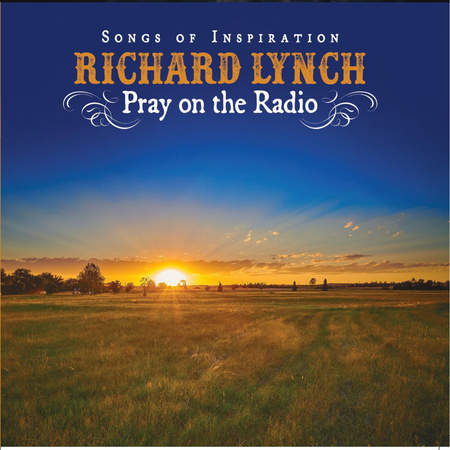
There’s a quiet defiance at the heart of Richard Lynch’s Pray on the Radio: Songs of Inspiration, and it has nothing to do with volume or flash. Instead, it lives in the album’s refusal to bend—to trends, to irony, to the kind of gloss that has smoothed over so much of modern country music. Lynch isn’t here to modernize tradition. He’s here to preserve it, and more importantly, to testify through it.
That sense of purpose runs deep across all 12 tracks. Lynch has long positioned himself as a torchbearer for classic country values, but Pray on the Radio feels more intimate than anything he’s done before. This is less about revival in the tent-preacher sense and more about lived-in faith—something worn comfortably, like a favorite jacket, rather than performed for show.
https://open.spotify.com/album/7h5b6nYJsW6xb3hclqLYvI?si=b22d8b2c965a423e
Opening track “Thankful, Grateful and Blessed” sets that tone immediately. It’s simple, almost disarmingly so, built on a melody that feels familiar in the best way. But it’s the lyric that anchors it—gratitude not as a slogan, but as a discipline. Lynch doesn’t pretend life is perfect. He just chooses to see what’s good anyway, and that choice becomes quietly radical.
The title track, “Pray on the Radio,” captures a moment that could easily veer into sentimentality—a DJ asking to pray live on air—but Lynch leans into its sincerity without overplaying it. There’s no sense of spectacle here. Just a man meeting the moment with humility. In a genre that often struggles with how to present faith without turning it into branding, Lynch’s approach feels refreshingly uncalculated.
That same restraint serves him well on “The Phone Call,” one of the album’s strongest narrative cuts. The story unfolds without embellishment, detailing a friend’s reckoning with his past and a decision to change. Lynch doesn’t position himself as a savior in the story. He’s simply a vessel, a reminder that music can reach people in ways conversation sometimes can’t. It’s a subtle but important distinction.
“Wait For Me” stands out as the album’s emotional core. Written as a farewell to his mother, it avoids melodrama in favor of something more grounded. The imagery is specific, the delivery steady, and the emotion lands all the harder because of it. Lynch understands that grief and faith often exist side by side, and he allows both to breathe in the song.
Musically, Pray on the Radio stays firmly rooted in traditional country. Steel guitar, gentle acoustic arrangements, and unhurried tempos give the songs room to speak. There’s no attempt to dress these tracks up for contemporary playlists, and that’s part of their strength. Lynch knows his audience, but more than that, he knows himself.
What’s most compelling about this record is its consistency—not just sonically, but philosophically. Lynch isn’t toggling between personas or chasing crossover appeal. Every song feels aligned with a singular worldview, one built on faith, family, and a belief in redemption that never feels forced.
In a broader sense, Pray on the Radio exists slightly outside the current country conversation—and that may be exactly the point. While much of the genre continues to wrestle with identity, Lynch offers something steady. Not revolutionary, but reassuring.
There’s a certain courage in that kind of steadiness. And on Pray on the Radio, Richard Lynch leans into it fully, delivering an album that feels less like a statement and more like a reflection—clear, grounded, and unwavering.
–Melissa Morrisson