
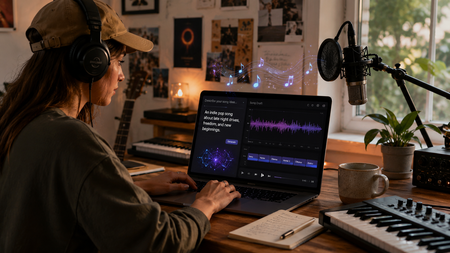
Independent artists usually have more ideas than time. A hook can arrive while walking home. A lyric can come together late at night. A rough chorus can feel exciting before it has any music around it. The hard part is not always finding ideas. It is turning them into something an artist can actually hear.
For years, that early demo stage depended on access. Artists needed recording software, instruments, production skills, collaborators, or studio time. Some musicians could move quickly because they already had those resources. Others had to wait for a producer, a session, or enough free hours to learn the technical side themselves.
AI music generators are changing that first stage of songwriting. They are not replacing taste, personal style, or the emotional choices that make a song worth hearing. What they can do is give independent artists a faster way to hear what an idea might become. Instead of starting with a blank recording session, an artist can now start with text.
Why Faster Demo Workflows Matter
Independent musicians rarely struggle because they have no ideas. More often, the challenge is deciding which ideas are worth developing. Which lyric has the most promise? Which chorus has movement? Should the song lean toward indie pop, acoustic, electronic, alternative rock, or something more cinematic?
Those questions are hard to answer when everything only exists in a notebook or voice memo. A traditional demo can help, but even a rough version requires decisions about tempo, chords, vocal tone, arrangement, drums, and structure. That work matters when a song is ready to be developed. During the early exploration stage, it can slow artists down.
This is where AI music tools can be useful. They let artists test creative directions before committing to a full production path. A prompt can describe the mood, genre, vocal style, instruments, and song structure. Within a short time, the artist can hear a draft and decide whether the idea has energy.
What Text-to-Song Really Means
Text-to-song creation is not simply typing a few words and receiving a finished track. It works better as a sketching process. The artist gives the tool a creative brief, and the tool returns one possible musical direction.
A broad prompt might be:
“An emotional indie pop song about leaving a small town, with warm vocals and a hopeful chorus.”
A more specific prompt might be:
“Mid-tempo alternative rock with male vocals, a clean guitar intro, steady drums, nostalgic lyrics, a strong chorus lift, and a bridge before the final hook.”
The more direction an artist gives, the more useful the result becomes. AI music generation works best when the prompt includes creative intent, not just a genre label. A phrase like “sad song” is usually too vague. A prompt that includes mood, tempo, vocal character, arrangement, and structure gives the system more to work with.
For artists who want to move from lyrics, style notes, or rough concepts into a quick song draft, a text-to-song AI music generator can work like a creative sketchpad before the full production stage.
How AI Music Generators Help Artists Test Ideas
The biggest benefit is speed. An artist can try several versions of the same idea without rebuilding the track from scratch each time. One version can be acoustic. Another can be synth-driven. Another can push the drums harder or make the chorus feel bigger.
This makes comparison easier. Sometimes a lyric feels emotional on paper but does not land in a fast arrangement. Sometimes a chorus works better at a slower tempo. Sometimes the genre changes the entire feeling of the song. AI-generated drafts help artists hear those differences earlier.
That does not mean every output will be useful. Many drafts will be imperfect. Some may miss the emotional tone. Some may feel too generic. But even a weak version can teach the artist something. It can show what not to do, which is often part of finding the right direction.
For independent artists, this kind of fast testing can be especially helpful. They may not have a producer available every day. They may only have a lyric, a mood, and a small window of time to work. AI music tools can help them keep moving before an idea goes cold.
Choosing the Right AI Music Generator for Song Ideas
Not every AI music generator is useful for independent artists at the early songwriting stage. The most helpful tools make it easy to describe a mood, choose a genre, shape the vocal direction, and compare different versions of the same song idea.
For artists working from lyrics or prompts, text-to-song tools are most useful when they help turn rough concepts into listenable drafts without requiring a full studio setup. A good AI song generator should not force the artist into one fixed sound. It should give them room to test different styles, arrangements, and emotional directions.
A useful prompt usually reads like a short production brief. Instead of writing “make a pop song,” an artist might write:
“Create a bright indie pop song with female vocals, upbeat drums, clean electric guitar, a catchy chorus, and lyrics about starting over after a difficult year.”
That kind of prompt gives the system a clearer frame. It also helps the artist think more clearly about the song. In many cases, writing the prompt becomes part of the creative process.
Creative Sketching, Not Artist Replacement
The healthiest way to use AI music is not as a shortcut around creativity. It is a tool for exploration. Independent artists still need to decide what they want to say, what emotion matters, what style fits the song, and which version feels honest.
AI can generate options, but it cannot know an artist’s story the way the artist does. It does not understand the personal memory behind a lyric. It does not know why a chorus should feel restrained instead of explosive. It cannot tell the difference between sadness, regret, nostalgia, and quiet acceptance unless the artist gives it direction.
Those choices still belong to the musician. AI music tools are most useful at the beginning of the process, when the artist is still testing ideas, comparing directions, and looking for a spark. The final identity of the song still depends on human judgment.
Independent artists should avoid treating the first AI result as the finished song. A better approach is to generate, listen, compare, revise the prompt, and keep only what helps the idea move forward. The artist’s ear remains the most important filter.
Where AI Fits in the Songwriting Workflow
AI music generation can fit into several stages of an independent artist’s workflow. At the idea stage, it can turn a rough theme into a quick audio direction. During songwriting, it can help test how lyrics sound in different moods. Before production, it can help artists communicate ideas to producers, bandmates, or collaborators.
For solo artists, this can be especially useful. Not every musician has a band or producer available on demand. A fast draft can help the artist decide whether a song is worth developing before bringing other people into the process.
For collaborators, AI drafts can also reduce confusion. Instead of saying, “I want something emotional but still energetic,” an artist can share a rough direction and explain what feels close, what needs to change, and what should be avoided.
The Future of Text-to-Song Creation
Text-to-song tools are likely to become a normal part of the independent music workflow. Just as home recording software made production more accessible, AI music generators are making early song development faster and more flexible.
The artists who benefit most will not be the ones who rely on AI to make every decision. They will be the ones who use it with direction. They will know how to describe a mood, shape a prompt, reject weak drafts, and develop the strongest ideas into something more personal.
For independent artists, the value is not that AI can create music instantly. The value is that it can make the beginning of the creative process less slow, less expensive, and less dependent on outside resources.
AI music generators allow artists to move from text to song faster, hear ideas earlier, and make creative decisions with more confidence. The human part of music is still the center of the work. AI simply gives artists another way to reach it sooner.