
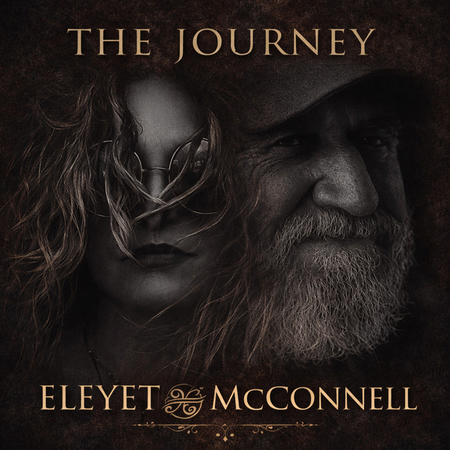
Rock and roll gets blamed for a lot of things. Too loud. Too angry. Too obsessed with youth. Too busy blowing up hotel rooms and setting guitars on fire to bother with the stuff that actually keeps people alive once the applause dies down. But here’s the dirty little secret: the best rock music has always been about love—not the greeting-card version, but the scarred-up, weather-beaten kind that survives after the fireworks burn out.
That’s where Eleyet McConnell sneak up on you with “Your Eyes.”
If “The Ledge” was the sound of kicking down the door to escape emotional imprisonment, “Your Eyes” is what happens after you’ve been free long enough to realize what was worth carrying with you. It’s not sentimental. It’s something much rarer than that.
It’s grateful.
The opening lyric lands with quiet force: “We walked away, the years have passed, I don’t know what I’d say if I saw you today.” Right there, before the arrangement has a chance to bloom, the song announces itself as a meditation on memory. Not nostalgia—the difference matters. Nostalgia edits the past. Memory keeps the bruises.
Angie McConnell sings these lines without theatrical heartbreak. She’s not trying to convince you she’s devastated. She’s simply remembering. And because she refuses to oversell the emotion, you lean in closer.
https://youtu.be/YYWXJxNtxHA?si=ycknG096HNZN1BaD
That’s how real people sound.
The chorus is deceptively simple:
“I remember your eyes… Your eyes so bright and how you looked in my soul.”
There’s almost nothing clever about those words, and that’s exactly why they work. Rock music has spent decades burying genuine feeling beneath metaphors, literary references, and enough symbolism to fill a graduate seminar. Sometimes the shortest distance between two hearts is just saying what you mean.
Musically, “Your Eyes” trades power chords for emotional weight. Built around a graceful piano arrangement and enriched with sweeping strings, the song embraces the grand tradition of the classic power ballad. Rather than chasing contemporary production trends, Eleyet McConnell lean into melody, atmosphere, and the kind of slow-building emotion that dominated FM radio when songs were allowed to breathe.
The influences feel less like imitation than shared emotional DNA. Angie McConnell’s commanding vocal presence recalls Heart at its most heartfelt, while her ability to move from quiet vulnerability to soaring intensity brings to mind Bonnie Tyler. There’s also a melodic elegance reminiscent of Roxette, the dramatic sweep of Laura Branigan, the emotional intimacy of Martha Davis, and the heartfelt sincerity that made Patty Smyth such a compelling rock vocalist. Together, those touchstones create a ballad that feels timeless without sounding dated.
The second verse quietly delivers the song’s emotional knockout punch:
“My hair is gray… Walk through life with me and be my best friend.”
Now we’re talking about something rock and roll almost never discusses honestly: growing older together.
Not pretending age doesn’t exist.
Not trying to outrun it.
Accepting it.
That’s revolutionary in its own understated way.
Chris McConnell’s musical instincts deserve recognition because they consistently favor the song over spectacle. Every note, every chord change, every swell of strings serves the emotional arc instead of distracting from it. The arrangement supports Angie’s vocal without overwhelming it, allowing the story to remain the focal point.
What impresses me most about “Your Eyes” is what it refuses to become. It never slips into syrup. It never mistakes orchestration for sentimentality or volume for passion. It trusts that genuine affection is dramatic enough all by itself.
Most modern love songs are trying to impress you.
This one is simply trying to tell you the truth.
And somewhere along the line, Eleyet McConnell remembered something a lot of artists forgot decades ago: growing old isn’t the opposite of romance.
Sometimes it’s the proof that romance was real all along.
–Leslie Banks