
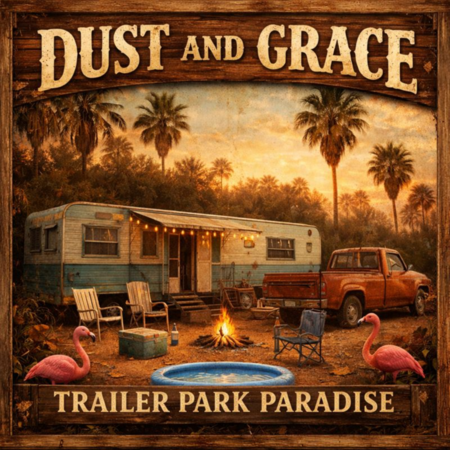
There’s a whole lotta country music these days pretending to be “down home” while wearing designer jeans that probably cost more than my first car. Then along comes Dust and Grace with “Trailer Park Paradise,” and suddenly the whole room smells like sunscreen, charcoal smoke, cheap beer, and freedom. Not fake freedom. Real freedom. The kind you earn after punching a clock all week and deciding you don’t need a passport to feel alive.
This song absolutely gets it.
“Trailer Park Paradise” doesn’t try to sell listeners some glossy Nashville fantasy about million-dollar trucks and Instagram-filter bonfires. It’s a working-class daydream, built from kiddie pools, homemade beer, Jimmy Buffett records, and the understanding that joy doesn’t have to cost a fortune. In fact, the song practically laughs at the idea that happiness comes with a luxury package.
That’s what makes it hit so hard.
From the opening lines, the track sets the stage with a familiar dilemma: everybody wants a vacation, but the bills are piled up and the money’s tied up in survival. Instead of turning bitter, though, Dust and Grace flip the script. Why chase paradise when you can build your own version of it right where you are? Fill the sandbox. Ice down the beer. Crank up Buffett. Problem solved.
https://www.youtube.com/watch?v=v53MkhsB2AI
And man, does it work.
The genius of the song lies in its details. Pink flamingos. Picnic table buffets. Feet in the water while sitting in a plastic pool in the middle of a trailer park. Those images don’t feel manufactured—they feel lived in. You can practically hear neighbors laughing in the distance while somebody burns burgers on a rusted-out grill.
I’ve always loved records that understood identity. Not image—identity. The songs that connected weren’t the ones trying to impress people in skyscrapers; they were the ones blasting from pickup trucks in gas station parking lots at midnight. “Trailer Park Paradise” belongs squarely in that tradition. It celebrates people who know how to create joy from almost nothing.
Musically, the track rides an easygoing country groove with enough bounce to make it instantly memorable. It’s not trying to reinvent the wheel, and thank God for that. The melody rolls like a backroad with the windows down, balancing humor and heart without tipping too far into novelty territory. That’s an important distinction. Lesser writers would’ve turned this into a joke song. Dust and Grace treat these characters with affection and dignity.
That line—“the best things in life are free”—could’ve been a throwaway cliché. Instead, it becomes the emotional center of the song. Because underneath the humor and the tropical trailer park imagery is something genuinely moving: a couple figuring out how to hold onto happiness when life doesn’t hand them much extra. There’s love in this song. There’s resilience in it.
What also makes “Trailer Park Paradise” stand out is how unashamedly American it feels—not in a political sense, but culturally. This is music about ordinary people making the best of ordinary circumstances. There’s something beautifully rebellious about refusing to be miserable just because your bank account says you should be.
By the final chorus, you’re not laughing at the scene anymore—you want to be there. You want the cheap tequila, the Buffett soundtrack, the plastic flamingos, the ridiculous homemade vacation. Because the song reminds us of something modern life keeps trying to erase: paradise isn’t a destination.
Sometimes it’s just the people you love, a little music, and enough imagination to turn a trailer park into a beachfront resort for one perfect summer night.
–Lonnie Nabors