
Introduction
For many resellers, the excitement of finding profitable inventory at thrift stores often outweighs the less exciting reality of listing those items online. Sourcing feels productive because it is active, fast, and rewarding, but listing is where revenue actually begins. Without getting products live on eBay quickly, inventory remains idle and profit stays unrealized. This gap between sourcing and listing is one of the biggest reasons many side-hustle resellers struggle to scale.
The speed of listing matters more than the size of the inventory pile. A reseller can source valuable products all week, but if those items stay in storage, they contribute nothing to cash flow. Delayed listings can also create missed opportunities when demand shifts or seasonal trends pass.
Artificial intelligence is changing this process by reducing the time and effort needed to create listings. Instead of manually writing titles, researching pricing, and selecting categories, sellers can streamline the workflow. Building a faster reseller system means moving from thrift store finds to live listings with less friction and more consistency.
Why Most Resellers Get Stuck After Sourcing
Sourcing inventory is often the most enjoyable part of reselling because it delivers instant satisfaction. Finding undervalued products creates excitement and motivates sellers to keep hunting. However, that same excitement can create a pattern where sourcing becomes the focus while listing becomes the backlog. This is often called the sourcing addiction cycle.
Many resellers end up with “death piles,” which are stacks of unlisted items waiting for attention. These piles represent money that is trapped rather than working. Even highly motivated sellers can feel overwhelmed when inventory grows faster than listings.
Time bottlenecks also play a major role. After returning from thrift stores, sellers must clean items, photograph them, research values, and create listings. Each step adds friction. When this process feels too long, procrastination builds.
Listing fatigue is another challenge. Writing detailed descriptions and entering item specifics repeatedly can feel draining. Over time, sellers begin delaying tasks because the workload feels repetitive. This creates a cycle where sourcing continues, but profits remain stalled because inventory is not reaching buyers.
The Real Cost of Slow eBay Listing
Slow listing affects more than just productivity. It directly impacts profits, cash flow, and storage efficiency. Every unlisted item represents potential income that has been delayed. For small resellers, this delay can create serious financial bottlenecks.
Cash flow is the biggest concern. Most resellers depend on sales revenue to reinvest into new inventory. When items remain unlisted, there is no money returning to the business. This limits sourcing opportunities and slows growth.
Storage becomes another issue. Unlisted items need space, organization, and tracking. As inventory piles grow, the chance of misplacing valuable items increases. A disorganized inventory system can lead to wasted time and forgotten products.
Market value can also change over time. Seasonal items lose relevance when listed too late. Electronics depreciate quickly as newer models appear. Trend-driven products may peak and decline before they ever reach the market.
The longer an item sits, the greater the risk of reduced demand. Fast listing protects value and increases the chance of reaching buyers while interest is high, making speed a crucial part of reseller profitability.
Building a Simple Source-to-List Workflow
A strong reseller workflow starts with simplicity. The goal is to reduce the number of decisions between sourcing an item and getting it listed online. Every extra step adds delay, which increases the chance of procrastination. A simple source-to-list pipeline keeps inventory moving efficiently.
The best systems begin with immediate sorting. Once inventory comes home, it should be categorized into groups such as clothing, electronics, collectibles, or home goods. This makes photography and listing easier later. Organized inventory creates less friction.
Batch processing is essential. Instead of listing one item from start to finish, many successful resellers photograph multiple items, research them together, and draft listings in blocks. This reduces context switching and saves time.
Modern reselling tools have also changed how quickly listings can be created. Platforms like the website FlowLister help automate titles, item specifics, and pricing research, making the fastest way to list ebay items far more efficient than manual entry. For side-hustle sellers, reducing manual work is often the difference between consistent growth and constant backlog.
A streamlined workflow keeps inventory active instead of buried in storage.
How AI Listing Tools Reduce Manual Work
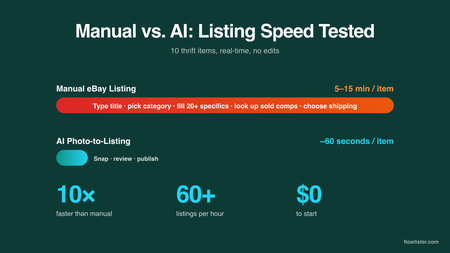
Artificial intelligence has changed how resellers handle repetitive listing tasks. Traditional listing requires entering product titles, descriptions, item specifics, categories, and shipping details manually. This process is time-consuming and often discourages consistency.
AI simplifies title creation by analyzing product details and generating optimized listings quickly. Instead of spending ten minutes thinking about keywords, sellers can receive structured suggestions in seconds. This improves speed while maintaining search relevance.
Descriptions also benefit from automation. Writing descriptions repeatedly can be exhausting, especially for high-volume sellers. AI can generate clear and accurate product summaries that reduce manual writing.
Item specifics are another major advantage. Many sellers lose time filling out measurements, brands, colors, and condition details. Automated tools can recognize these patterns and suggest fields, reducing repetitive data entry.
Category matching matters because miscategorized products can reduce visibility. AI helps identify the best category based on product images or keywords.
These improvements reduce mental fatigue. Instead of focusing on repetitive tasks, sellers can focus on sourcing, quality control, and customer service. Automation transforms listing into a faster, less stressful part of the business.
Using Photos as the Starting Point for Faster Listings
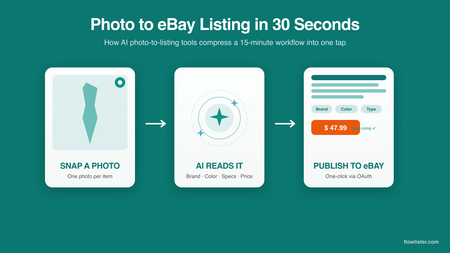
A photo-first workflow can dramatically improve reseller efficiency. Instead of starting with research or writing, sellers begin by capturing product images. This creates momentum because photography is often faster and easier than listing.
Mobile photography systems are especially useful for part-time resellers. A smartphone, clean background, and proper lighting can create strong images without expensive equipment. The faster the photo process, the quicker listings move forward.
Photos also create a visual inventory system. Sellers can review images later for drafting listings, reducing the need to handle products repeatedly. This saves time and minimizes mistakes.
Consistency matters in product photography. Similar angles, lighting, and framing make inventory easier to process. Standardized images also improve buyer trust because listings look more professional.
AI tools now use photos as the foundation for listing generation. Product recognition can suggest categories, titles, and details based on images alone. This removes much of the manual setup.
For busy sellers, starting with photos creates structure. It turns physical inventory into digital assets immediately, making the transition to live listings smoother. A strong photo-first process shortens the path from sourcing to selling.
Batch Listing Strategies for Part-Time Sellers
Part-time sellers often struggle because their available time is limited. Batch listing helps solve this by organizing work into focused sessions instead of scattered tasks. This approach creates consistency and reduces wasted effort.
A strong batch listing system works best when similar tasks are grouped together:
- Group similar inventory types: Listing similar products together reduces mental switching. Clothing listings often require the same fields, while electronics follow another pattern. This consistency speeds up entry and reduces errors.
- Create multiple drafts at once: Drafting several listings in one session is faster than completing one item at a time. Sellers can research comparable items together and maintain workflow momentum. This saves significant time over the week.
- Schedule dedicated listing blocks: Setting aside fixed time for listing improves discipline. Even two focused hours can produce meaningful progress. A predictable routine keeps inventory moving.
- Prepare shipping details in advance: Pre-measured packaging and saved shipping templates eliminate repeated setup. Sellers spend less time calculating each order. This creates smoother publishing and fulfillment.
Batch systems turn limited time into productive time. For side-hustlers balancing jobs and family, efficiency often matters more than available hours.
Pricing Faster Without Guesswork
Pricing is one of the most difficult parts of reselling because it affects both speed and profit. Pricing too high can slow sales, while pricing too low cuts margins. The goal is to make informed pricing decisions quickly.
Sold listings are the most reliable source of pricing data. Active listings show what sellers want, but sold listings show what buyers actually paid. Reviewing recent sales creates realistic expectations.
Speed matters when researching comps. Spending too much time comparing every detail can slow the listing process. Experienced sellers learn to identify pricing ranges rather than exact values.
Condition plays a major role in pricing. A used item in excellent condition may justify higher pricing than an average example. Accurate condition assessment prevents unrealistic pricing.
Competition should also influence strategy. If dozens of similar items exist, pricing aggressively may create faster sales. If supply is limited, sellers may have more flexibility.
AI pricing tools can reduce guesswork by identifying comparable listings quickly. This helps sellers move faster while staying competitive. The balance between speed and pricing accuracy is critical for maintaining both cash flow and profit margins.
Automating Repetitive eBay Tasks
Automation is not limited to listing creation. Many repetitive tasks within eBay can also be streamlined, reducing daily workload and improving consistency. Small efficiencies add up over time.
Several areas benefit from automation:
- Shipping profiles: Saved shipping profiles reduce repeated setup. Sellers can apply standard package sizes, carrier options, and delivery settings instantly. This keeps listings consistent and saves time.
- Listing templates: Templates remove the need to rebuild common listing structures. Product categories with repeated details can use pre-built formats. This makes drafting much faster.
- Return policy presets: Consistent return settings improve buyer confidence and reduce setup work. Instead of adjusting each listing manually, sellers can apply saved policies quickly. This ensures uniformity across inventory.
- Saved item specifics: Common product attributes can be stored for repeat use. This is especially useful for clothing brands, electronics, or collectibles. It reduces repetitive typing and improves speed.
These automated systems create a smoother workflow. They reduce decision fatigue and allow sellers to focus on activities that directly increase revenue, such as sourcing and improving inventory quality.
Scaling a Side Hustle Without Burning Out
Scaling a reseller business requires more than increasing inventory volume. It requires sustainable systems that can support growth without overwhelming the seller. Burnout often happens when workload grows faster than process efficiency.
One of the biggest causes of reseller burnout is unrealistic expectations. Trying to source, list, pack, and ship large volumes alone can quickly become exhausting. Sustainable growth requires balanced goals.
Repeatable systems are essential. When sellers follow the same workflow each day, tasks feel less stressful. Consistency creates predictability, which reduces mental strain.
Weekly listing targets are more effective than vague goals. Instead of aiming to “list more,” setting a target such as 25 listings per week creates accountability. Clear goals improve focus.
Rest is often overlooked in side-hustle culture. Constant hustle can reduce decision quality and motivation. Taking breaks improves long-term performance.
Automation supports sustainability by removing repetitive work. Faster listing systems reduce workload without sacrificing output. For side-hustlers balancing jobs, family, and reselling, efficiency protects both profits and personal energy. Growth should feel manageable, not chaotic.
Choosing the Right AI Tools for Reselling Growth
Not all AI tools are built for resellers, and choosing the right one can affect both efficiency and accuracy. Many generic tools offer automation, but they may not understand marketplace-specific requirements.
The first feature to prioritize is marketplace relevance. Tools designed for eBay should understand listing structure, categories, and search behavior. Generic systems may create inaccurate outputs.
Workflow compatibility is equally important. The best tools fit naturally into existing reseller habits instead of forcing major changes. A tool should simplify work, not create extra steps.
Speed is another critical factor. The purpose of AI is to reduce listing time. If setup takes too long, the value of automation decreases.
Accuracy matters just as much as speed. Poor category suggestions or unrealistic pricing can create problems. Reliable tools should balance automation with practical market knowledge.
Tool stacking can also improve productivity. Some sellers combine pricing tools, photo systems, and AI listing software to create a complete workflow.
Choosing wisely means evaluating how much time the tool saves and how well it supports long-term scaling. The right system becomes part of the reseller’s growth strategy.
Conclusion
A successful reseller workflow depends less on how much inventory is sourced and more on how quickly that inventory becomes available to buyers. Unlisted products represent delayed profit, blocked cash flow, and missed opportunities. Building a faster source-to-list system helps sellers reduce backlog and maintain momentum.
Artificial intelligence has made it easier to simplify listing tasks, automate repetitive work, and create more consistent workflows. From photo-based listing systems to batch drafting and smarter pricing strategies, modern tools help resellers move faster with less effort.
For side-hustle sellers and thrift flippers, speed creates flexibility. Faster listings lead to faster sales, quicker reinvestment, and more stable growth. The goal is not just to source great inventory, but to build a system that turns that inventory into revenue efficiently. In reselling, speed is often the hidden advantage that separates hobby sellers from scalable businesses.