
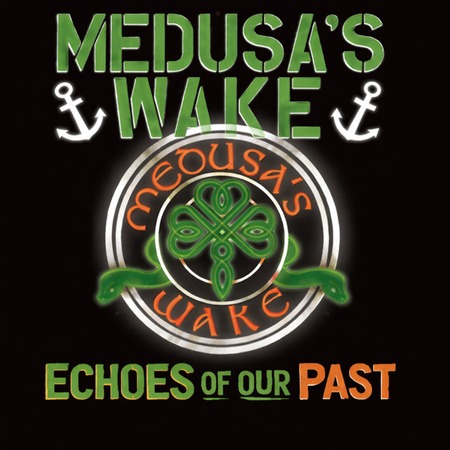
There is a long-standing tradition in Celtic folk-punk of turning grief into something communal that’s sung, shouted, and shared over raised glasses. With “Echoes of Our Past,” Medusa’s Wake steps firmly into that tradition, delivering an EP that is as emotionally raw as it is musically rousing.
Echoes of Our Past was written in the aftermath of frontman Eddie Lawlor losing both his father and brother within a short span. The EP transforms that grief into song, transforming into a meditation on loss, identity, and endurance.
Musically, Medusa’s Wake operates in their unmistakable blend of Irish heritage and Australian grit. The arrangements follow the well-worn but still potent territory of Celtic folk-punk, drawing clear lineage from bands like The Pogues while infusing it with an Australian pub-rock sensibility.
One of the EP’s strongest elements is its rich, layered instrumentation, which seamlessly fuses traditional Celtic textures with classic rock. The Fiddle and accordion sections give the record its melodic identity while electric guitar and bass occasionally step in to drive the tracks forward.
Opening with a burst of energy, “Creeper” sets the tone with driving drums and a catchy bassline. “O’Keeffe’s Slide / Bones of Our Dead” follows as the EP’s most musically expansive piece; beginning with a traditional Irish introduction before unfolding into a full-band arrangement. The EP closes with “War of Independence,” an anthemic and historically charged single that reinforces the band’s connection to Irish heritage and rebellion.
The production of Echoes of Our Past strikes a careful balance. It is cleaner and more refined than the band’s earlier work, with sharper arrangements and clearer separation of instruments, yet it retains the rawness essential to the genre.
Echoes of Our Past succeeds by deepening the emotional core of Celtic folk-punk. By grounding their sound in genuine loss and lived experience, Medusa’s Wake creates an EP that feels authentic, communal, and enduring. It is a record that invites listeners to hear the music and participate in it.