
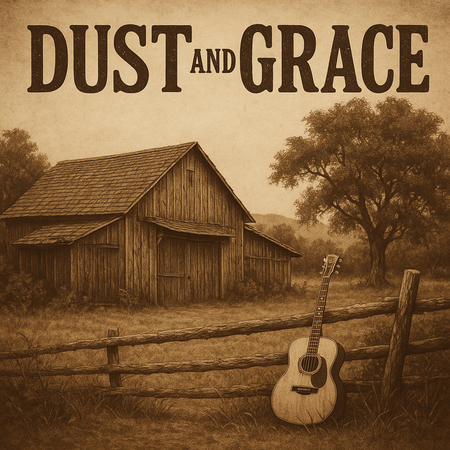
Dust and Grace’s self-titled debut isn’t just a collection of songs—it’s a statement of values. Rooted in faith, family, and the rhythms of everyday American life, the project showcases Michael Stover’s songwriting with a clarity of purpose that feels both timeless and deeply personal. This is country music that doesn’t chase trends; it plants its boots firmly in the soil and lets the stories grow naturally.
From the opening notes of “My American Dream,” the album establishes its core identity. It’s a front-porch manifesto—raising kids right, Sunday mornings in church, and gratitude for a simple life. There’s no irony here, no wink to the audience. The sincerity is the point, and it lands because it’s written with lived-in detail: chicken dinners, bare feet in the yard, and generational values passed down like heirlooms.
“Hallelujah,” the project’s breakthrough hit, remains a centerpiece. It’s communal, almost revival-like in its structure, inviting listeners not just to hear but to participate. The repetition becomes a strength, turning the song into a shared experience rather than a performance. That same spiritual throughline carries into “He Made It All,” a beautifully rendered meditation on creation that finds God in both the grand and the ordinary—stars in the sky, a child’s laughter, the quiet awe of existence itself.
https://www.youtube.com/watch?v=v53MkhsB2AI&feature=youtu.be
But the album isn’t one-note devotion. There’s range here. “Trailer Park Paradise” injects humor and charm, celebrating making the most out of what you have. It’s playful, relatable, and undeniably catchy—a backyard vacation anthem that feels tailor-made for summer playlists. On the other end of the spectrum, “Love Doesn’t Live Here” delivers heartbreak with restraint, avoiding melodrama in favor of quiet resignation.
“Backroad Country” and “Already There” reinforce the album’s thematic backbone—identity tied to place, upbringing, and belief. These songs don’t just describe rural life; they defend it, elevate it, and preserve it. Meanwhile, “Crave” steps slightly outside the album’s spiritual center, offering a more visceral, romantic intensity that adds dimension without feeling out of place.
One of the album’s most affecting moments comes with “Little Footprints,” a tender reflection on parenthood and the passage of time. It’s the kind of song that sneaks up on you—simple in structure, but emotionally devastating in its honesty. By the time it reaches its final verse, it’s less a song than a memory you didn’t realize you had.
Closing track “I’m Comin’ Home,” co-written with Bryan Cole, brings everything full circle. Redemption, second chances, and the idea of returning—not just to a place, but to a sense of self—serve as a fitting conclusion to an album built on grounding principles.
What makes Dust and Grace compelling isn’t just the songwriting—it’s the cohesion. Every track feels like it belongs to the same world, one where faith isn’t performative, love isn’t disposable, and life’s simplest moments carry the greatest weight.
In a genre that often splits between nostalgia and modern polish, Dust and Grace manage to bridge both. This is contemporary country with an old soul—and it resonates because it believes every word it sings.
–John Simpson