
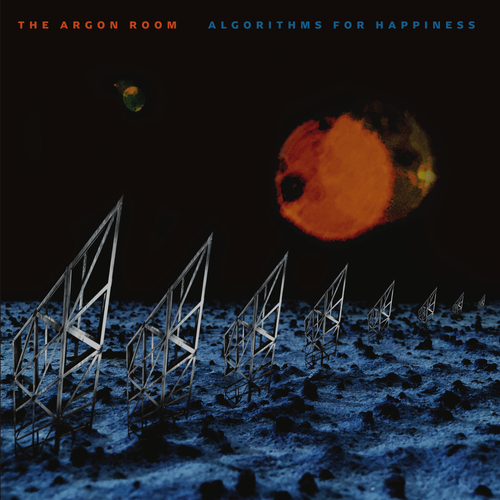
Grief, isolation and the search for meaning form the emotional foundation of Algorithms For Happiness, the debut album from Sydney-based alternative rock outfit The Argon Room. Conceived in the aftermath of David Bowie’s death in 2016, the ten-track record transforms personal loss into a loosely connected science-fiction narrative. Its story follows two travellers searching for a new home in space, only for one to die, leaving the other to confront an eternity of solitude.
Although the premise is fantastical, the emotions explored throughout the album are unmistakably human. The group touches on mortality, loneliness, and the possibility of finding hope amid despair, with the arrangement occupying a compelling space between neo-psychedelia, dream pop and post-punk. Echoes of The Cure, David Bowie and The Jesus and Mary Chain are evident in its musical direction, particularly in the combination of shimmering guitars, brooding synthesizers and spacious arrangements.
https://mgmreleases.com/algorithms-for-happiness
Producer Timothy Powles, best known as the drummer for The Church, plays an important role in shaping the album’s identity. His layered production favours immersive textures and carefully developed instrumental passages, allowing the music to move between introspection and dramatic intensity. Simon Starling’s deep, expressive vocals provide a theatrical quality that complements the record’s existential subject matter.
Opening track “Holding My Head” establishes the album’s melancholic atmosphere with dreamy instrumentation and emphatic percussion. Written immediately after Bowie’s death, the song captures the disorientation of losing someone whose presence once seemed permanent.
“Am I… Hello” explores the painful silence that follows loss, with haunting vocals and sparse, unsettling textures reinforcing its central theme of unanswered communication. Meanwhile, “Maybe There’s Hope” introduces a livelier electronic pulse while questioning humanity’s dependence on technology and the potential loss of independent thought. Its shifting mood makes it another particularly engaging contribution.
Starling’s songwriting is often more interested in conveying emotional uncertainty than presenting a neatly structured narrative. This approach gives the album room for interpretation, allowing its science-fiction setting to function as a metaphor for more familiar experiences of grief and alienation. However, the conceptual storyline can also be elusive, requiring listeners to piece together its emotional connections rather than follow a clearly defined progression.
The closing stretch is particularly effective. “Last Star” incorporates an increasingly turbulent arrangement, culminating in a striking, almost industrial instrumental passage. Featuring expansive guitar work from Jeffrey Cain, the finale introduces a more uplifting atmosphere without offering an overly convenient resolution to the album’s darker questions.
http://theargonroom.com/
http://theargonroom.bandcamp.com/
http://instagram.com/THEARGONROOM/
http://facebook.com/THEARGONROOM
Algorithms For Happiness may draw heavily from familiar alternative rock and art-rock traditions, but its greatest strength lies in the sincerity of its songwriting and the care invested in its arrangements. The sustained melancholy can become demanding, yet the record remains an absorbing exploration of loss and perseverance. Through its rich production, evocative instrumentation and thoughtful thematic development, The Argon Room delivers a debut that finds considerable beauty in uncertainty.