
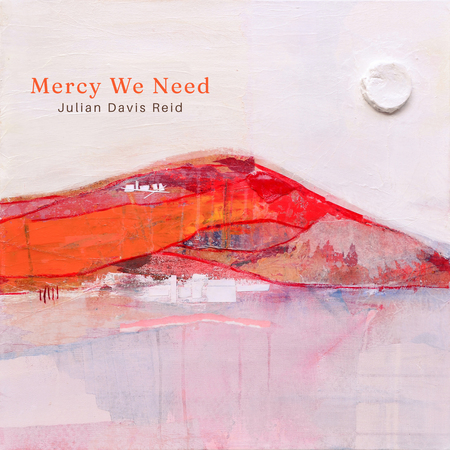
On his latest release, “Mercy We Need,” pianist and composer Julian Davis Reid treats jazz as a language for working through grief, gratitude, faith and uncertainty. The second full-length release from his Circle of Trust ensemble brings together post-bop, gospel and neo-soul to create something that transcends regular definitions of genre. The music constantly reaches out for some form of consolation without pretending that consolation is easy to find.
The difference between this album and last year’s Vocation is immediately apparent in the expanded role of vocalist Tramaine Parker. Reid remains the musical centre at the piano, joined by alto saxophonist Lenard Simpson, bassist Ethan Philion and drummer James Russell Sims, but Parker appears across roughly half of the record. Rather than dividing the record into “songs” and “jazz pieces,” Reid allows those sides to bleed naturally into one another.
https://www.juliandavisreid.com/music
https://www.instagram.com/juliandavisreid/
https://linktr.ee/juliandavisreid
Opener “Not Yet Home” establishes that balance particularly well. Reid introduces an immediately memorable piano theme and keeps returning to it in different forms, giving the piece an almost circular quality. It is primarily instrumental, but the late arrival of Parker and Eva Supreme as an ethereal vocal choir changes its scale: what begins as introspection gradually feels communal.
“Her Care A Gift” moves closer to soul and gospel, giving Parker more room to inhabit the foreground. Her singing is an ideal counterweight to Reid’s playing. Where his piano can be reflective and searching, Parker brings weight and immediacy; she makes the album’s spiritual concerns feel lived rather than merely conceptual.
That becomes particularly important around the record’s centre. “Moan” returns from Reid and Parker’s 2025 When Souls Cry Out project, which was explicitly conceived as an expression of lament and hope in the face of death. Parker’s intense wordless vocalisations communicate something that conventional lyrics arguably could not; grief is allowed to exist before anybody attempts to explain it.
Closer “Memory” is appropriately understated. After almost an hour of searching for mercy in its different forms, the album does not demand some enormous final revelation. Memory itself becomes part of how loss is carried forward.
At eight tracks and roughly 55 minutes, Mercy We Need is deliberately patient. The result is a record that feels intimate without becoming insular and devotional without requiring the listener to share Reid’s theology. Mercy We Need does not offer easy transcendence. It does something more convincing: it sits with grief, searches for grace within it, and leaves enough silence around the answers to acknowledge that some of them have not arrived yet.