
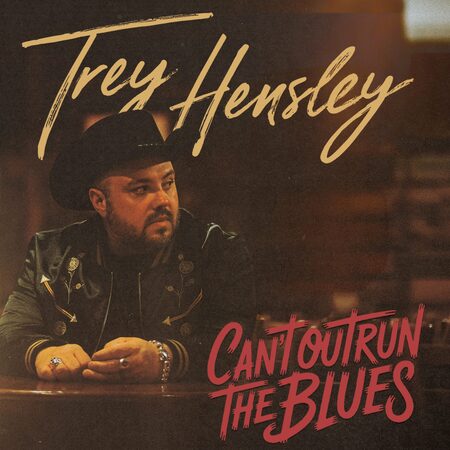
In a moment when bluegrass finds itself both expanding and redefining its borders, Can’t Outrun The Blues positions Trey Hensley not merely as a virtuoso guitarist, but as a thoughtful architect of modern acoustic music. The album arrives at a time when artists such as Billy Strings and Molly Tuttle are broadening the genre’s audience, while younger acts like Sierra Hull and The Po’ Ramblin’ Boys reaffirm its technical rigor. Hensley’s latest effort stands comfortably within this evolving landscape—deeply traditional in vocabulary, yet distinctly contemporary in execution.
URL: https://www.treyhensley.com/
Produced by seven-time Grammy winner Brent Maher, whose résumé stretches from The Judds to Merle Haggard, the album is marked by sonic clarity and structural patience. Maher resists the temptation to over-embellish. Instead, he cultivates space—allowing the acoustic guitar to ring with woody resonance, the fiddle to arc gracefully across the stereo field, and the rhythm section to maintain propulsion without crowding the vocal narrative.
The title track, which earned Hensley his first solo No. 1 on Bluegrass radio, serves as both thesis and declaration. “Can’t Outrun The Blues” is propelled by fleet, articulate flatpicking, yet its technical brilliance never overshadows its melodic accessibility. Hensley’s voice—robust, centered, and emotionally direct—anchors the performance with conviction. There is a sense of lived experience in his phrasing, suggesting an artist who understands not only the mechanics of the genre but its emotional grammar.
Elsewhere, the album demonstrates admirable breadth. “Tucson,” written solely by Hensley, unfolds like a tightly scripted Western vignette. Its driving pulse and vivid storytelling recall the stark narrative tradition of Johnny Cash, yet the instrumental interplay feels decidedly current. It is easy to imagine the track resonating equally on a bluegrass festival stage or in the headphones of a listener discovering acoustic music through today’s genre-fluid playlists.
The collaborative selections further illuminate Hensley’s curatorial instincts. “Going And Gone,” featuring Tuttle, crackles with instrumental dialogue—two guitarists in mutual admiration, trading precision and flair with effortless chemistry. “Unknown Legend,” a reimagining of a composition by Neil Young, is rendered with reverence and restraint, enhanced by harmony vocals from Vince Gill. Rather than attempt reinvention, Hensley reframes the song through bluegrass tonality, preserving its introspective core.
“One White Line At A Time,” featuring Steve Wariner, leans into Americana’s expansive sensibility, while “Silverthorn Mountain” channels classic country grit through an Appalachian filter. The sequencing is deliberate: energetic passages yield to contemplative interludes, culminating in the understated grace of “Off To Sea,” a closing meditation that underscores Hensley’s compositional maturity.
https://open.spotify.com/track/0BFoYaJxS5L1DN8eN0clsa?autoplay=true
Importantly, Can’t Outrun The Blues does not seek to “modernize” bluegrass through stylistic fusion or conspicuous experimentation. Instead, it exemplifies a subtler evolution—one in which technical mastery, songwriting craft, and production elegance coexist without tension. In doing so, Hensley joins the ranks of contemporary artists who are redefining the genre not by abandoning its foundations, but by reaffirming them with renewed clarity.
For listeners attuned to the current renaissance in acoustic music, this album stands as a persuasive statement of intent. Can’t Outrun The Blues is both reverent and forward-looking—an assured, finely wrought contribution to bluegrass’s ongoing conversation with the present.
Gwen Waggoner