
Massachusetts-based composer Ron Rieder returns to his Latin jazz roots with ‘Post Bop Cubism,” his fourth studio album, scheduled for release on January 1, 2027. Across ten original instrumental compositions, Rieder explores Afro-Cuban and Brazilian musical traditions, incorporating elements of bebop, bolero, guaracha, danzón and samba. freedom and the simple pleasure of dancing inform much of his writing, with several compositions inspired by his own experiences. Following the straight-ahead jazz direction of Compositions in Blue and Other Hues, the album revisits the musical territory of his earlier releases while introducing a wider range of instrumental arrangements.
Website: https://ronriedermusic.com
Bandcamp: https://ronrieder.bandcamp.com/
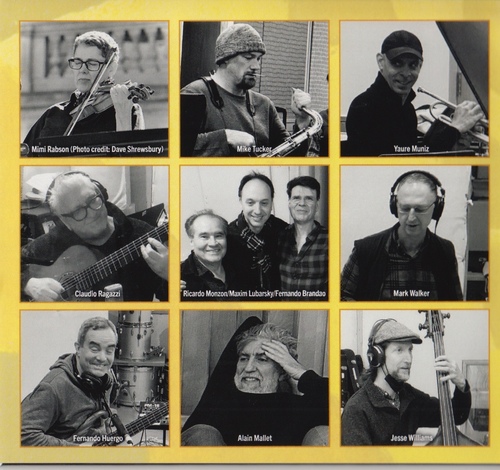
The album’s instrumentation centres on a seven-piece ensemble featuring woodwind, brass, bass and percussion. The larger ensemble is particularly important to Rieder’s compositions, given the rhythmic complexity of the Latin American dance styles he explores. The flute, trumpet and saxophone provide three distinct instrumental voices for melodic development and improvisation. Guest appearances from violinist Mimi Rabson, guitarist Claudio Ragazzi and pianist Maxim Lubarsky introduce further variety to the arrangements.
Among the standout compositions is “Cat’s Cradle,” a fast-paced guaracha featuring solos from Tucker, Muniz, Mallet and Monzón, giving both the melodic instruments and percussion opportunities to take the lead. “Danzón Primaveral” explores the more graceful qualities of Cuba’s national dance, with the combination of violin, flute, piano and percussion distinguishing it from the other arrangements. The title track pays tribute to Cu-bop, a style that combines bebop improvisation with Afro-Cuban rhythms, with Brandão’s flute taking a featured role.
“Spanish Nights,” inspired by Rieder’s time in Madrid, is another particularly interesting arrangement, featuring Ragazzi’s acoustic guitar alongside solos from Brandão and Lubarsky. The Brazilian influences become more prominent towards the latter half of the album, with the upbeat “O Sol e A Lua” followed by “Samba de Libertação,” a celebration of personal freedom expressed through samba. Rieder takes a different direction with the closing track, “Postlude: Le Chant d’Orphée,” a lyrical waltz inspired by the Greek myth of Orpheus and his journey into the underworld.
Recorded at Wellspring Sound in Massachusetts over two sessions, the album was recorded and mixed by Joshua Lu and mastered by Jonathan Wyner. The production approach centres on acoustic instrumentation and ensemble performances, with the arrangements allowing room for individual improvisation without losing sight of the compositions themselves. The distribution of solos across the wind instruments, piano, strings and percussion is a particularly appealing aspect of the arrangements.