
By Lonnie Nabors
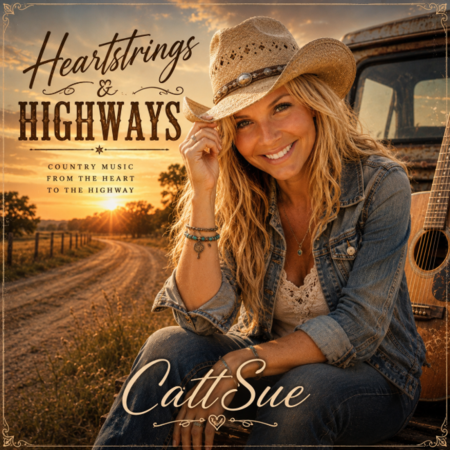
There is something almost defiantly unfashionable about sincerity in music right now, which is exactly why CattSue’s Heartstrings and Highways lands with such force.
This is not a record built around mystique. There are no smoke machines, no carefully manufactured distance, no attempt to convince the listener that pain is glamorous. CattSue comes at these songs from the opposite direction. She names the people. She remembers the places. She opens the family album and points directly at the scars.
Across 11 tracks, Heartstrings and Highways moves through love, grief, motherhood, family memory, resilience, faith, survival and addiction with the emotional directness of somebody who has stopped worrying about whether vulnerability looks cool.
That begins with the record’s relationship to memory.
https://open.spotify.com/album/4ecbSaK5oWvec09LU0zsHu?si=iINOs7R7RjCJBQMNz1mKlw
“A Whisper on the Wind” is rooted in the loss of CattSue’s mother when she was only four and a half years old. What makes the song resonate is not some oversized declaration of grief, but the tiny details that survived it: National Park, New Jersey, photographs, a Mrs. Beasley doll, the frustrating inability to remember exactly what her mother’s voice sounded like.
Those are the things that stay.
“More Time” carries that same ache into CattSue’s relationship with her father. Here, grief arrives through riverbanks, Sunday Eagles games, repeated stories and words of encouragement that somehow continue speaking after the person who said them is gone. It is one of the album’s clearest strengths: CattSue understands that the biggest emotions are usually hiding inside the smallest memories.
Family is everywhere on this record, but rarely presented as simple.
“Little Man” watches a son grow from childhood into adulthood, moving from tiny footsteps down the hall to the moment when the child who once needed his mother becomes the man holding her hand.
Then “Mother’s Heart” turns the picture over.
This is motherhood without the greeting-card filter. It deals with sacrifice, disappointment, distance and the painful truth that you can give somebody everything you know how to give and still end up hurt.
That emotional honesty becomes even more pronounced on “Broken.” CattSue doesn’t pretend resilience means walking away untouched. The song understands that survival can look messy. Sometimes being strong simply means continuing.
“In the Light” is the album’s most overtly outward-facing statement. Written for survivors of trafficking, abuse and exploitation, it is informed by CattSue’s personal connection to human trafficking through a family member and friends who were trafficked. The song moves beyond sympathy and toward reclamation. Voice. Identity. Freedom. Life.
That distinction matters.
CattSue isn’t singing about survivors as damaged people waiting to be rescued. She is singing about people taking themselves back.
The album’s closing track, “When the Clouds Come Home,” co-written with David Murphy, turns toward addiction. The metaphor is smart because addiction often does feel like weather. The pressure changes. The darkness gathers. The storm returns to familiar territory.
But the song’s deeper point is that nobody has to fight alone.
There are prettier records than Heartstrings and Highways. There are probably slicker ones. There are certainly records more interested in impressing you.
That is not this album’s mission.
CattSue is more interested in recognition.
She wants somebody listening to hear a line about a parent, a child, a loss, a wound, a relapse, a memory, and think: yes. I know that place.
That is the road this album travels.
The highways keep moving.
The heartstrings never really do.