
By Doug Marshall
Popular music has never lacked self-appointed heroes. Rock stars have been sold as rebels, prophets, saviors, and occasionally all three before the second album. Harry Kappen’s “Good Samaritans” rejects that familiar mythology. Its heroes are anonymous people standing in the rain, helping strangers without cameras, applause, or promises of immortality.
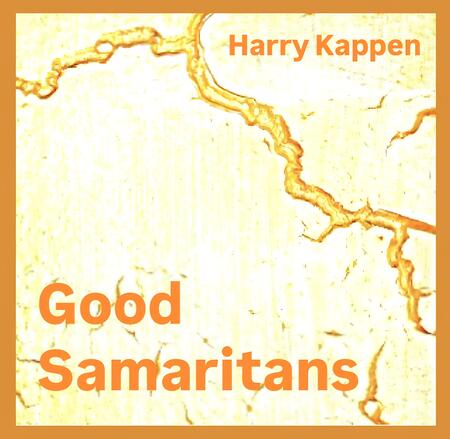
Taken from Kappen’s album After the Crossing, the song is a forceful rock statement about the widening gap between appearing compassionate and actually practicing compassion. Kappen sets his argument inside a culture built on “flashy words,” filtered pain, sculpted skies, and carefully manufactured happiness. It is a world where tears become champagne, every photograph hides an agenda, and fulfillment can supposedly be purchased through the correct lifestyle.
That critique could have become a predictable complaint about social media. Instead, Kappen asks a more consequential question: What happens when self-promotion becomes so constant that even kindness is treated as a branding opportunity?
https://www.youtube.com/watch?v=7FlyNRnuAbU
“Good Samaritans” answers by turning its attention toward people whose actions carry no promotional value. They stop, listen, help, and remain present. They do not advertise themselves as heroic because their concern is directed outward, toward another person’s suffering. Kappen’s lyric “simple hearts choose to stay / when the rest walk away” captures the song’s moral argument without disguising it as poetry too refined for ordinary listeners.
That accessibility matters. The song is direct because the behavior it honors is direct. Somebody needs help; somebody else provides it. Everything separating those two actions—vanity, hesitation, fear of inconvenience—is part of the problem Kappen wants to expose.
Mexican singer Danna Gomez appears in the choruses, expanding the refrain beyond one man’s declaration. Her contribution gives the song a communal quality appropriate to its subject. Compassion, after all, cannot survive as an individual pose. It becomes meaningful only through contact with others.
“Good Samaritans” also belongs to a period of transition for Kappen. After the Crossing is his first album recorded following his move from the Netherlands to Mexico, and he performed, sang, and produced its ten tracks himself. He has cited David Bowie as an influence on this single and its predecessor, “Distant Shore.” Here, that influence is evident in Kappen’s interest in spectacle and identity—particularly the masks people construct for public approval.
Yet the song ultimately strips the spectacle away. “These saints don’t wear capes,” Kappen sings, dismantling the superhero image with one plainspoken line. Real courage is rarely cinematic. More often, it is quiet, repetitive, emotionally demanding, and unseen.
The record’s social criticism would mean little without an alternative, and Kappen supplies one: attention freely given to another human being. “Good Samaritans” argues that empathy is not weakness or decoration. It is action.
At a time when public life rewards volume, vanity, and constant self-display, Kappen makes a convincing case for those who do the necessary work without demanding credit. The song celebrates no fantasy savior. It honors the people already among us, waiting in the rain.