
The next generation of music distribution is becoming less about simply delivering songs – and more about giving artists the tools, transparency and flexibility to build sustainable careers.
By Rebel Music Distribution
—
For independent artists, getting music onto Spotify, Apple Music, YouTube Music and other major platforms is no longer the difficult part. The real question in 2026 is what happens after the release goes live.
Artists today expect more from a distributor than basic delivery. They want clear analytics, faster support, practical tools, transparent royalty reporting and the freedom to release music without being locked into expensive annual plans. As competition across the music industry grows, distribution is gradually becoming part of a much wider artist infrastructure.
That shift is especially visible among self-managed artists, producers and small labels. Many of them are releasing more frequently, collaborating internationally and managing several projects at the same time. A distribution service that simply uploads a track and disappears until the next release is no longer enough.
From access to infrastructure
For years, music distribution was largely defined by access. Independent musicians needed a way to reach the same digital stores as major-label artists. Once that access became widely available, the market changed.
Now the difference between platforms is increasingly defined by what they provide around distribution: analytics, catalogue management, monetization options, mastering tools, rights support and, perhaps most importantly, communication with artists.
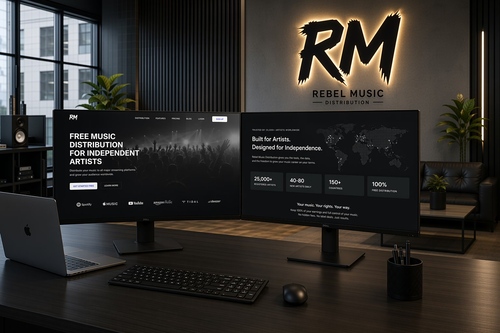
This is one of the ideas behind Rebel Music Distribution, an independent platform built from a musician’s perspective. Rebel Music currently works with more than 25,000 artists and music projects, while continuing to grow internationally. Its basic distribution model has no mandatory annual subscription, and artists keep 90% of their distribution royalties.
The goal is not simply to make distribution cheaper. It is to reduce the friction that often makes releasing music more complicated than it needs to be.
A distributor is becoming part of the artist’s workflow
The modern independent artist often handles tasks that were once spread across an entire team. One person may be writing, recording, producing, designing artwork, planning social media, uploading releases and tracking royalties.
That makes workflow increasingly important. Artists need information quickly. They need to know whether a release is under review, whether metadata needs to be corrected, how a track is performing and what options exist when something goes wrong.
This is why features such as daily trend data, catalogue analytics and accessible human support are becoming more important. They may not sound as exciting as a new streaming platform or a viral marketing tool, but they can make a major difference when an artist is managing dozens of releases over several years.
Rebel Music has also integrated free online mastering into its ecosystem, reflecting another broader trend: distribution platforms are gradually becoming creative and operational hubs rather than simple delivery services.
Artists are paying more attention to ownership and flexibility
Another major change is the way independent musicians think about control.
Artists are increasingly cautious about long contracts, recurring fees and services that make it difficult to move their catalogue later. The growth of independent music has created a generation of creators who want professional infrastructure without giving up unnecessary control.
That does not mean every service should be free, or that every artist needs the same tools. It means pricing and rights need to be understandable. Optional services should be clearly separated from essential distribution, and artists should know what they are paying for.
For Rebel Music, this has meant keeping core distribution free while offering additional services separately when they require extra processing or third-party costs. The broader principle is simple: artists should be able to choose the services they actually need.
Human support still matters in an automated industry
Music technology is becoming increasingly automated. Artificial intelligence can now help create music, artwork, promotional videos and marketing copy. Distribution systems themselves depend heavily on automated metadata checks, fraud detection and delivery pipelines.
But automation has also made one thing more valuable: the ability to reach a real person when something unusual happens.
A release can be delayed because of metadata, rights questions, artist mapping, platform policies or technical issues. For an independent artist without a manager or label team, getting a clear answer can be more important than having another dashboard feature.
This is why Rebel Music continues to treat human support as part of the product rather than an afterthought. As platforms scale, maintaining that level of communication becomes more difficult – but also more important.
The next phase of independent distribution
The independent music market is unlikely to become simpler. More music is being released, more creators are entering the market and the number of tools available to artists keeps growing.
The distributors that remain relevant will probably be the ones that understand they are no longer competing only on store delivery. They are competing on trust, transparency, workflow, support and the quality of the ecosystem around the release.
For artists, that is ultimately good news. More competition between distribution platforms means more choice – and more pressure on those platforms to provide genuine value.
The future of music distribution may therefore be less about asking, “Can I get my music onto streaming services?” and more about asking, “Which platform actually helps me build around the music once it is there?”
For thousands of independent artists, that distinction is becoming increasingly important.
About Rebel Music Distribution
Rebel Music Distribution is an independent music distribution platform based in Trieste, Italy. Built by musicians and focused on independent creators, the platform provides global digital distribution, analytics, free online mastering and artist support for a growing international community.
Website: rebelmusicdistribution.com