
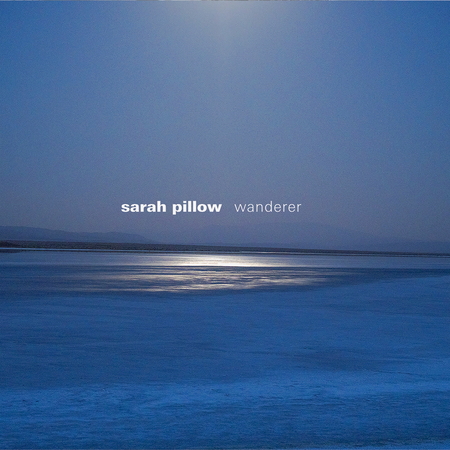
Few singers have followed a musical path as deliberately unpredictable as Sarah Pillow. Her career has moved among straight-ahead jazz, classical singing and progressive rock, often dissolving the boundaries between them. On Wanderer, she returns decisively to her jazz roots, approaching the tradition with the curiosity of an artist who has spent decades travelling beyond it.
The album is built around a deceptively expansive idea. Each of its 13 compositions relates in some way to travelling, yearning or returning. Pillow has described its central figure as an “astral nomad”: someone moving through both physical and imaginative space in pursuit of discovery.
That concept gathers together material that might otherwise seem almost impossibly eclectic. The album opens with Irving Berlin’s standard, “Blue Skies.” Pillow picks up the tempo on her interpretation, delivering a more energetic performance than the Fitzgerald classic we all know and love.
The celestial side of the theme immediately announces itself through Pillow’s dreamy performance of Sergio Mendes’ “So Many Stars.” The classic pop sound of “How High the Moon” is reinterpreted with a jazzier, horn-led arrangement, somewhat diverging from its romantic image. Even “Stella by Starlight,” one of the most frequently revisited standards in jazz, earns its place within a larger constellation.
https://buckyballmusic.com/wanderer
The most revealing choices, however, may be the three pieces associated with Charles Mingus: “Duke Ellington’s Sound of Love,” “Tonight at Noon” and “Eclipse.” Mingus’ music carries emotional contradictions that suit Pillow’s concept particularly well: tenderness beside volatility, reverence beside unease and discipline constantly pushing against freedom.
There is nevertheless a risk within the album’s ambitious design. “Wandering” is broad enough to connect almost any song to any other, and could easily feel more like an anthology than a unified statement. But its closing movement from “500 Miles High” through “Nature Boy” to “Wayfarin’ Stranger” appears particularly well judged: the album descends from the cosmic to the human, finally leaving behind sophisticated metropolitan jazz language for a song of mortality, faith and homecoming.
Rather than choosing one road, Wanderer celebrates the act of moving between them. Its real subject is artistic curiosity: the conviction that jazz remains most alive when a musician is willing to leave familiar territory without losing sight of where the journey began.