
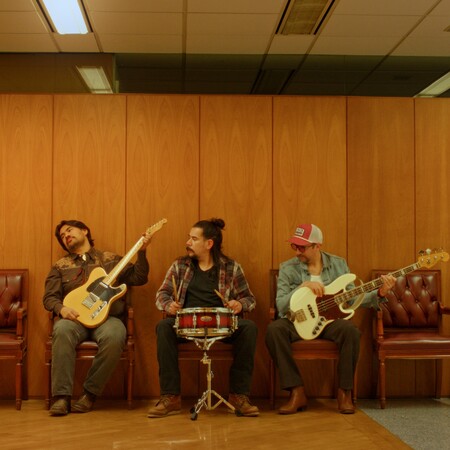
Charlie and the Moonshine arrive with the kind of origin story that already feels half-mythologised: formed in the Mexican mountains, recording in Avándaro, and chasing a version of Americana that sounds less like heritage preservation and more like geographical drift. Their debut doesn’t so much announce itself as settle in, dusty, slightly unkempt, and insistent on the idea that “authenticity” is something you capture in the room rather than construct in post-production.
That ethos is both their strongest asset and, occasionally, their limitation. The record leans heavily on live takes and audible bleed, a decision that gives the songs a restless, communal energy but also blurs their sharper edges. At its best, this approach creates a sense of proximity, you can almost hear the band negotiating with the material in real time. At its weakest, it leaves arrangements feeling less like deliberate compositions than well-played sketches that resisted refinement.
The centrepiece, “The Evil Mary”, distils the project’s ambitions into four minutes of escalating tension. It opens in familiar territory: country-leaning guitar figures, a steady snare, a vocal delivery pitched somewhere between reverence and fatigue. There’s a trace of early Kings of Leon in the melodic contour, though Charlie and the Moonshine are less concerned with sleekness than accumulation, layers of sound gradually thickening until the track tips into something louder, less polite, more uncertain of its own control.
Across the wider project, that tension between intent and execution becomes the defining characteristic. The band clearly understand the vocabulary of modern Americana, its nostalgia, its grit, its coded sincerity, but they’re more compelling when they allow those elements to fray at the edges. The Avándaro setting helps: you can hear space in the recordings, a kind of environmental echo that makes everything feel slightly uncontained.
Charlie and the Moonshine don’t yet sound like a band fully in possession of their identity, but they do sound like one willing to risk ambiguity in pursuit of it. That alone sets them apart from more polished contemporaries. Whether that openness solidifies into something sharper remains the more interesting question.