
A plumbing emergency never arrives at a convenient moment. It typically occurs past midnight, over a holiday weekend, or right as you are preparing to leave for work. A ruptured water line, an overflowing toilet, or a failing hot water system can shift a household from absolute comfort to severe property damage in a matter of minutes.
Faced with rising water or a sudden loss of utility, many homeowners make the costly mistake of clicking the very first ad they see on a search engine. In the high-pressure environment of an emergency, this rushed choice can lead to unlicensed workmanship, hidden fees, or hazardous quick-fixes. Because residential plumbing directly impacts structural integrity, drinking water safety, and gas lines, selecting the right partner requires a methodical approach.
Emergency Severity Checklist: When to Call Immediately
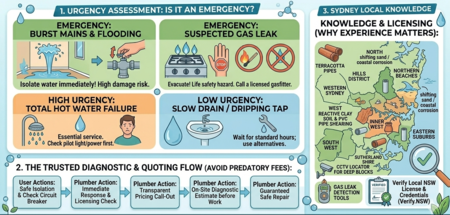
Not every plumbing inconvenience demands an immediate after-hours call-out fee. Use this decision matrix to evaluate your situation before dispatching a technician:
| Situation | Immediate Action Required | Call Out Urgency |
| Burst Mainline / Flooding | Isolate the water at the main meter box instantly. | Critical – Call immediately to prevent structural damage. |
| Suspected Gas Leak / Odor | Evacuate, turn off gas valve, do not touch light switches. | Critical – Life safety hazard. Requires licensed gasfitter. |
| Total Hot Water Failure | Check the circuit breaker or pilot light safely. | High – Essential service, especially for families or rentals. |
| Single Slow Draining Sink | Stop using the specific basin; use alternative sinks. | Low – Can wait for standard weekday business hours. |
Core Pillars of a True Emergency Plumbing Service
To protect your property and your wallet during a crisis, ensure the plumbing provider you engage checks every one of these vital professional benchmarks:
1. Verifiable NSW Licensing and Gasfitting Credentials
Never allow an unverified tradesperson to work on your home’s infrastructure. In New South Wales, all plumbing, drainage, and gasfitting work must be performed by an appropriately qualified professional. Gas work carries exceptional risk; carbon monoxide leaks from improperly serviced systems are completely invisible and highly toxic, causing severe illness or long-term injury.
Before giving a technician the green light to begin emergency repairs, always confirm their credentials via official government verification registers to ensure they hold an active, clean contractor license.
2. Deep Local Knowledge and Regional Experience
Sydney’s architectural landscape varies dramatically by region, and each presents distinct structural challenges:
- The Inner West & CBD: Dominated by historic terraces and older commercial footprints featuring fragile earthenware pipes and complex, shared boundary traps.
- Western & South West Sydney: Home to sprawling builds subject to significant soil movement (reactive clay), which causes premature PVC pipe shearing.
- Northern Beaches & Sutherland Shire: Vulnerable to shifting sandy soils and coastal corrosion elements.
Choosing an established local team ensures the responding technician arrives with the exact specialized tooling required for your suburb’s specific architectural pain points.
3. Absolute Pricing Transparency
A reputable emergency service provider will never exploit a crisis. While an exact final repair cost cannot always be determined over a phone call before a physical inspection, a trustworthy operator will clearly explain their base emergency call-out fee, their standard after-hours hourly rates, and provide a clear diagnostic estimate on-site before commencing any physical teardown or repair work.
[Customer Calls Hotline]
│
▼
[Clear Call-Out Fee Stated]
│
▼
[On-Site Diagnostic Check] ──► [Upfront Quote Provided]
│ │
▼ ▼
[Customer Authorizes Work] ◄───────────────┘
│
▼
[Safe, Guaranteed Repair]
Crucial Steps to Take While Waiting for the Technician
The decisions you make in the twenty minutes before your plumber arrives can save you thousands of dollars in structural restoration costs.
- For Major Water Leaks: Locate your property’s main water meter (usually found near the front boundary line for houses, or under the kitchen sink/bathroom for apartments) and turn the valve clockwise to cut the water supply to the entire building.
- For Hot Water System Ruptures: Turn off the dedicated isolating valve on the cold water inlet pipe feeding into the tank, and switch off the corresponding hot water switch at your main electrical meter box.
- For Gas Scents: Keep all doors and windows wide open to maximize ventilation. Do not turn lights on or off, use household appliances, or light matches, as any tiny electrical arc can act as an ignition source.
If you are currently facing an active plumbing failure, reaching out to a dedicated emergency plumber in Sydney who provides round-the-clock rapid response, transparent flat-rate pricing, and certified workmanship will ensure your home is stabilized safely without predatory fees.
Red Flags to Avoid During an Emergency Call
Be highly alert to these warning signs when dealing with a service provider:
- Refusal or hesitation to provide an official NSW license number.
- Demanding full credit card payment over the phone before dispatching a vehicle.
- Rushing to recommend massive, destructive wall-cutting or excavation without performing a basic diagnostic sequence first.
- Arriving in unbranded vehicles without professional identification or clear uniform indicators.
An emergency plumbing situation is undeniably stressful, but maintaining a calm, methodical approach prevents you from making a rushed decision. By prioritizing licensed operators, demanding upfront cost clarity, and ensuring the team has verifiable local experience, you transform a potential household disaster into a safely managed, professional repair that stands the test of time.