
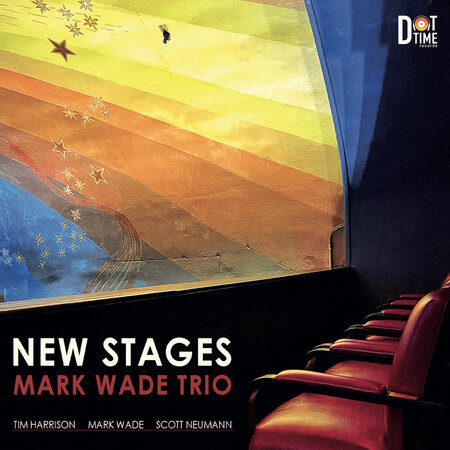
Mark Wade Trio doesn’t unveil a decisive shift in their creative identity with their latest album, “New Stages.” For bassist and composer Mark Wade, this record is a culmination of his career so far; a meeting point between his engagement with classical repertoire and fluency in modern jazz improvisation.
New Stages is a collection of original works inspired by classical masterworks Wade has performed and internalized over years of orchestral experience. Yet this is not an adaptation in a straightforward sense. Instead, Wade extracts themes from baroque through modern eras and reimagines them through the elastic language of the jazz trio.
The most compelling aspect of New Stages is its refusal to settle into a tidy label. As Wade himself notes, “Good music is good music, no matter what label you want to put on it.” In several pieces, one can sense the ghost of orchestral grandeur distilled into intimate trio interplay. Wade’s bass often functions as both anchor and narrator, stating themes with lyrical clarity before venturing into agile, exploratory passages.
The two-part suite “Iberia Part I” and “Iberia Part II” is a great example of this, as the composition unfolds like a mini-journey. Showcasing more dramatic energy, “The Storm” lives up to its name with dynamic shifts and expressive interplay between the trio members. Wade’s more lyrical sensibilities shine through in “Waltz and Variation,” a classical waltz that is deconstructed and reassembled through jazz phrasing and rhythmic nuance.
https://dottimerecords.bandcamp.com/album/new-stages
What elevates New Stages beyond a conceptual exercise is the trio’s chemistry. The arrangements allow space for each voice to stretch and respond, reflecting Wade’s belief in communication as the core of ensemble playing. The harmonic textures of Tim Harrison’s piano frequently echo classical voicings, while Scott Neumann’s drumming balances subtlety with propulsion.
Wade’s electric bass appearances add further contrast, introducing a modern sheen and subtle fusion edge without ever tipping the balance away from the project’s conceptual core. His tone is warm on acoustic while staying resonant and articulate on electric, forming the emotional throughline of the album.
Is New Stages jazz? Classical? Something in between? Wade leaves that question open, and rightly so. What matters is the integrity of the synthesis. By distilling centuries of musical thought into the fluid immediacy of the trio format, Mark Wade has crafted a work that feels both reverent and refreshingly original.