
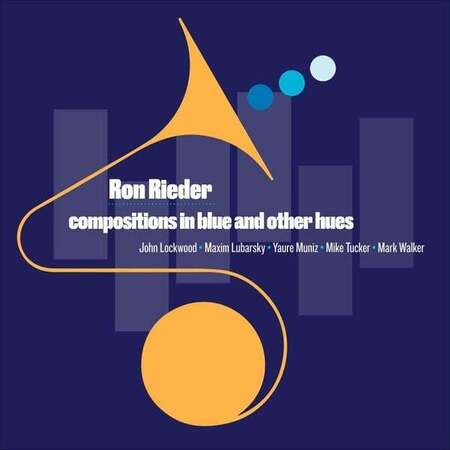
Massachusetts-based composer Ron Rieder makes a decisive turn toward straight-ahead jazz with his latest release, “Compositions in Blue and Other Hues.” Featuring a collection that is as rooted in tradition as it is animated by personal expression, this new album strips away the clave and replaces it with rhythms that swing, bop, and breathe.
At its core, Compositions in Blue and Other Hues is a study in jazz color. The title itself signals Rieder’s intent, with “blue” functioning both as an emotional reference point and as a stylistic anchor. The “other hues” suggest a broader palette of tempos, and textures across eleven original compositions,
https://ronrieder.hearnow.com/compositions-in-blue-and-other-hues
Stylistically, the album sits firmly in the straight-ahead tradition as hard bop, blues, and swinging post-bop forms dominate the soundscape. Yet it never sounds academic or reverential. Rieder’s writing favors clear melodic ideas and logical harmonic movement, providing fertile ground for improvisation while maintaining strong compositional identity.
The album’s sequencing reinforces its conceptual coherence, as each track feels like a distinct shade within a larger spectrum. from the earthy blues inflection of “Peach Blossom Blues” to the playful retro imagery suggested by “Broadway Boogie,” Rieder demonstrates that he’s not afraid of experimenting. Even the brief “Interlude: Amingus Amonkus” functions as a tonal palate cleanser, nodding subtly to jazz lineage while keeping the album’s momentum intact.
Much of the album’s strength lies in the caliber and chemistry of the ensemble. The quintet features Yaure Muniz (trumpet), Mike Tucker (tenor saxophone), Maxim Lubarsky (piano), John Lockwood (bass), and Mark Walker (drums), bringing a collective energy that elevates the material beyond the page.
Produced by Rieder himself, the album benefits from a clean, natural production aesthetic. The mix favors clarity and balance, allowing each instrument its own space while preserving the feeling of a live ensemble in motion.
Ultimately, Compositions in Blue and Other Hues succeeds because it reaffirms straight-ahead jazz as a living, expressive form. Rieder’s compositions invite the listener in, and showcase the kind of musicianship that thrives on trust, interaction, and shared intent. It’s a reminder that sometimes the deepest colors emerge not from expansion, but from refinement.