
A compound interest calculator can help Hong Kong savers and investors estimate how their money could grow when interest or investment returns are reinvested over time. Unlike simple interest, compound growth allows previously earned returns to generate additional returns.
For people planning their savings in Hong Kong, using a 复利计算器 can make it easier to understand the potential effect of interest rates, investment periods, initial deposits, and regular contributions.
What Is Compound Interest?
Compound interest is the process of earning returns on both your original amount and the returns that have already accumulated.
In simple terms, your money can grow faster over time because each period’s return becomes part of the balance used to calculate future returns.
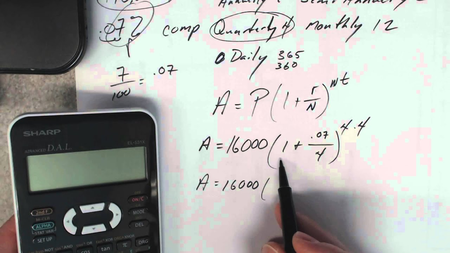
The basic compound-growth formula is:
Where:
- FV represents the future value
- PV represents the initial amount
- r represents the annual growth or interest rate
- n represents the number of compounding periods
How Does a Compound Interest Calculator Work?
A compound interest calculator usually requires several basic inputs.
Initial Investment
This is the amount you start with.
For example, you might begin with HK$50,000.
Interest Rate
This is the annual rate of return used in the calculation.
A higher rate can produce greater growth, but actual investment returns are not guaranteed unless the product specifically provides a fixed return.
Investment Period
This represents how long your money remains invested.
The longer the period, the more opportunity there is for compound growth to accumulate.
Compounding Frequency
Interest can be compounded annually, semi-annually, quarterly, monthly, or according to another schedule depending on the product.
The compounding frequency can affect the final result.
Example of Compound Interest
Suppose you start with HK$50,000 and assume an annual return of 4% for five years, with annual compounding.
The estimated future value would be approximately HK$60,833.
The difference between the starting amount and final amount represents the accumulated growth over the period.
This example is only an illustration. Actual savings or investment returns depend on the product and applicable rate.
Compound Interest vs. Simple Interest
The main difference is that simple interest is calculated only on the original principal, while compound interest can be calculated on the accumulated balance.
For example, if you earn interest and leave it invested rather than withdrawing it, the accumulated interest can become part of the balance that generates future returns.
This is why compounding can become increasingly important over longer periods.
Why Use a Compound Interest Calculator in Hong Kong?
A compound interest calculator Hong Kong tool can help people estimate potential savings growth in HKD or another currency.
It can be useful for:
- Long-term savings
- Retirement planning
- Investment planning
- Education savings
- Comparing different return assumptions
- Understanding the effect of time
- Estimating future financial goals
Rather than relying on rough calculations, users can adjust different assumptions and see how the estimated result changes.
The Importance of Time
Time is one of the most important factors in compound growth.
A longer investment period gives accumulated returns more opportunity to generate additional returns.
For example, an investor who starts saving earlier may have more time for compounding to work, even if the initial investment is relatively modest.
This is one reason long-term financial planning often focuses on consistency and time rather than trying to predict short-term market movements.
Effect of Different Interest Rates
The assumed interest rate can have a significant impact on the final result.
Suppose you start with HK$100,000 and leave it invested for ten years.
A calculator can show different scenarios using rates such as:
- 2%
- 4%
- 6%
- 8%
The final values can be substantially different because the higher rate compounds over every period.
However, a higher expected return generally comes with greater investment risk. A calculator should therefore not be used to assume that a higher rate is guaranteed.
Regular Contributions and Compound Growth
Many people do not invest only a single lump sum. They add money regularly.
For example, someone might contribute HK$1,000 every month to a long-term investment account.
Regular contributions can increase the amount of capital available to compound over time.
A calculator that supports recurring contributions can therefore provide a more realistic estimate for people who follow a regular savings strategy.
Compound Interest for Fixed Deposits
Compound interest calculations can also be useful when considering fixed deposits, but savers should understand how the particular deposit works.
Some fixed deposits pay interest at maturity without automatically adding the interest to the principal during the same term.
If the interest is not reinvested, the actual growth pattern may differ from a continuously compounded investment.
Therefore, use the calculation method that matches the product’s actual terms.
Compound Interest and Savings Accounts
Savings accounts can also benefit from compounding when earned interest remains in the account.
However, the interest rate on a savings account may change over time.
Promotional rates can also have eligibility requirements or limited periods.
When using a compound interest calculator, it is important to distinguish between a fixed guaranteed rate and an assumed future rate.
Currency Considerations in Hong Kong
Hong Kong investors may hold assets in HKD, USD, RMB, and other currencies.
If your investment is denominated in a foreign currency, the compound interest calculation does not automatically account for changes in exchange rates.
For example, an investment may grow in USD while its value measured in HKD changes because of movements in the USD/HKD exchange rate.
Therefore, currency risk should be considered separately from the compound-growth calculation.
Inflation and Real Returns
A compound interest calculator generally shows the future value of your money in nominal terms.
It does not automatically tell you how much purchasing power that money will have in the future.
Inflation can reduce the amount of goods and services that a given amount of money can purchase.
For long-term planning, it can therefore be useful to consider both the estimated investment return and the potential effect of inflation.
Compound Interest Calculator for Long-Term Goals
A calculator can be especially useful when planning a specific financial target.
For example, you might want to estimate how much you need to save each month to reach a particular amount after ten or twenty years.
You can adjust:
- Starting balance
- Monthly contribution
- Expected annual return
- Investment period
- Compounding frequency
This allows you to compare different saving strategies.
Important Limitations
A compound interest calculator provides an estimate, not a guarantee.
Actual results can differ because of:
- Changes in interest rates
- Investment losses
- Fees and expenses
- Taxes
- Inflation
- Currency movements
- Changes in contribution amounts
- Different compounding methods
For investments, historical returns should not be treated as guaranteed future performance.
Tips for Using a Compound Interest Calculator
When using a compound interest calculator in Hong Kong, consider the following:
- Enter the correct starting amount.
- Use a realistic interest or return assumption.
- Include regular contributions if applicable.
- Select the correct investment period.
- Check the compounding frequency.
- Consider fees and expenses.
- Account for inflation when planning long-term goals.
- Consider currency risk for foreign-currency investments.
- Compare conservative and optimistic scenarios.
- Treat the final figure as an estimate rather than a guarantee.
Conclusion
A compound interest calculator in Hong Kong can be a useful planning tool for understanding how savings or investments may grow over time. By entering the starting amount, expected return, investment period, and other relevant information, savers can estimate the potential effect of compounding.
The biggest advantage of compound growth is that returns can themselves generate additional returns when they remain invested. However, calculator results depend on the assumptions used, and actual outcomes can differ because of changing rates, investment performance, fees, inflation, and currency movements. Using realistic assumptions and comparing different scenarios can help Hong Kong savers make better-informed long-term financial plans.