
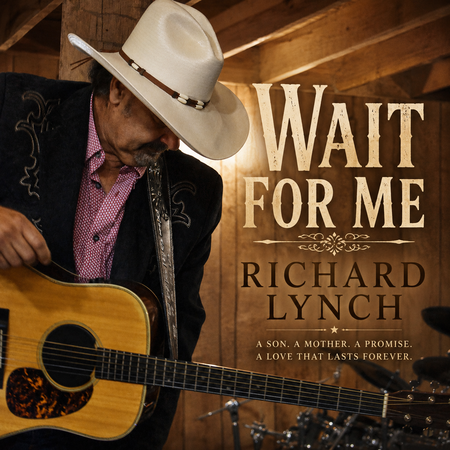
Some songs arrive as records. Others arrive like conversations you’ve been waiting your whole life to have. Richard Lynch’s “Wait For Me” belongs to the latter category. It doesn’t chase the charts or attempt to reinvent country music. Instead, it reaches backward into the oldest promises America still keeps with itself—faith, family, memory—and asks whether those promises still mean anything when you’re standing beside a hospital bed, holding the hand that first held yours.
Country music has always understood that ordinary lives carry epic weight. Lynch understands that, too. He doesn’t present himself as a hero or philosopher. He’s simply a son trying to arrive before time runs out. That simple premise becomes something larger because the song refuses to dramatize death. Instead, it measures a life by its fingerprints.
The lyric about his mother’s hands is where the song quietly transforms. Hands that soothed fevers, stitched torn clothes, wiped away tears, and carried burdens become more than family memories—they become an unwritten history of invisible labor, the kind of work that never earns headlines but somehow keeps the world intact. In those verses, Lynch isn’t just singing about his mother. He’s singing about every woman whose sacrifices disappeared into everyday life so completely they became almost impossible to notice until they were gone.
https://open.spotify.com/track/3TyMazsQu2vJgyb2rCE3lz?si=ff3ac64be0894e6a
Musically, “Wait For Me” refuses distraction. The arrangement is patient, almost stubbornly so. Acoustic guitar, steel guitar, restrained rhythm, and gentle accompaniment move together with the confidence of musicians who understand that silence can carry as much emotional weight as sound. Nothing competes with the story because nothing needs to. The production trusts the listener.
Lynch’s voice carries the grain of experience. It’s not polished into perfection, and that’s precisely why it works. Every phrase sounds lived rather than rehearsed. When he sings, “Momma, I’m on my way… hold on, wait for me,” the line doesn’t arrive like a dramatic chorus. It lands like a prayer whispered during a drive no one wants to make but everyone eventually does.
What makes the recording especially compelling is its refusal to separate grief from faith. The references to God never feel ornamental or obligatory. They emerge naturally from the worldview of the narrator. Death isn’t presented as an ending so much as a final act of trust. The comfort comes not from certainty, but from love that has already done its work.
There is an older America inside this song—not the mythical one politicians invoke, but the one built around front porches, Sunday mornings, family farms, and parents whose greatest accomplishments were never written down. Lynch gives that America a voice without pretending it was perfect. He simply remembers it honestly.
By the time “Wait For Me” reaches its final verse, the song has become something beyond autobiography. It is an act of gratitude. It suggests that the measure of a life isn’t found in achievement or acclaim, but in whose hand you reach for when the room grows quiet.
Richard Lynch has made a country record that doesn’t ask listeners to admire it. It asks them to remember. And in doing so, it reminds us that sometimes the most powerful songs don’t announce themselves at all—they simply sit beside us, take our hand, and wait.
–Marcus Grey