
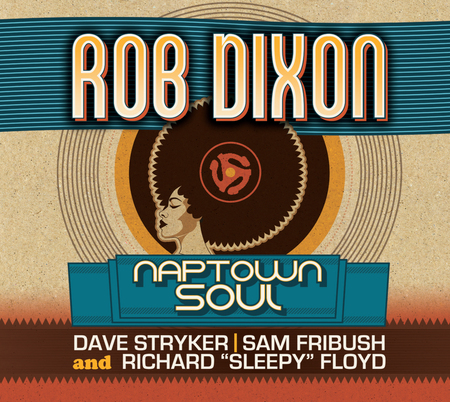
Rob Dixon’s latest album, “Naptown Soul” is a groove record built as a civic statement. “Naptown” here points directly to Indianapolis, especially the Black musical life of Indiana Avenue, whose legacy runs through blues, gospel, jazz, funk, and soul. Dixon frames the album as a continuation of that lineage, tracing the term “Naptown” through Indianapolis’ Black musical community and linking the city’s soul-jazz identity to figures such as Wes Montgomery, Freddie Hubbard, J.J. Johnson, and Slide Hampton.
The album’s format is classic soul-jazz: Dixon on tenor and soprano saxophone, Dave Stryker on guitar, Sam Fribush on organ, and Richard “Sleepy” Floyd on drums. The track list balances tribute and authorship, with Dixon contributing four originals alongside modernized renditions of four classics.
The album opens with “Sly Vibe,” which carries a tight, groove-forward soul-jazz feel. Wes Montgomery’s “Bumpin’ on Sunset” follows as one of the key historical anchors, immediately connecting Dixon’s project to Indianapolis’ most internationally celebrated jazz figure.
“Naptown Blues” is the conceptual centerpiece, directly linking the record to the older history of the Naptown name. But the album’s standout moment is the reimagining of Marvin Gaye’s “I Want You.” This sensual and lyrical performance contrasts strongly with the more forceful tenor work elsewhere on the album.
https://www.indyjazzfoundation.org/inductee/rob-dixon
https://www.instagram.com/robdixonsax/?hl=en
The setup on this record is deliberately lean, with Stryker and Dixon taking the lead on production. They’re not merely trying to recreate a vintage soul-jazz surface; it is built by musicians who know how that music breathes. Naptown Soul is polished enough to feel like a serious contemporary jazz release, but its value lies in the warmth and directness that compliments the live-band chemistry.
Naptown Soul is a historically aware soul-jazz record from a musician who has earned the right to tell this story. Dixon is placing Indianapolis back into the soul-jazz conversation, not as a footnote to bigger scenes, but as a living source. For listeners who like Wes Montgomery’s organ-combo warmth, Stanley Turrentine’s soulful authority, or modern Hammond-driven jazz, this should be a very easy record to enter, and a richer one the more you understand the city behind it.