
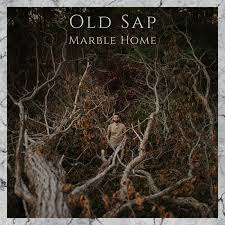
Old Sap’s Marble Home carries the weight of reflection without becoming heavy-handed. It feels like a record shaped by movement and memory, where experience is distilled into tone rather than declaration. Produced by Josh Goforth, the album balances intimacy and breadth, allowing its arrangements to feel organic while still carefully guided.
URL: https://www.oldsapmusic.com/
“High Wind Moon” sets the tone with a grounded sense of purpose, its banjo-driven rhythm establishing a steady foundation. The instrumentation moves with an ease that suggests lived-in familiarity rather than studio precision. This approach continues throughout the album, giving the music a sense of presence that aligns with its themes of observation and return.
Old Sap’s songwriting leans toward suggestion, but the lyrics themselves reveal a deeper philosophical thread. In “Golden Mind,” the refrain “golden, golden, golden / golden mind” feels less like a declaration than a question—what remains valuable after experience has worn everything else down. Lines like “tarnished… the barn was fixed after the fire” quietly frame resilience without romanticizing it, grounding the song in work and recovery.
“Tressa’s” shifts the tone outward, capturing social friction and emotional fatigue with a sharper edge. The line “I kick the trash can over… I want a refund, they refuse” introduces a moment of restless dissatisfaction, while the recurring refrain “all talk of God is poetry” reframes certainty as something fluid and interpretive. It’s one of the album’s clearest lyrical statements, balancing cynicism with a kind of reluctant compassion.
“Nadine” deepens the emotional core, pairing pedal steel with imagery of disorientation and self-reproach. The repeated phrase “you’re not home, honey, you’re not home” carries both accusation and longing, reinforcing the album’s broader concern with belonging. The imagery—“feathers and seeds… dancing on the breeze”—contrasts motion with stagnation, highlighting the tension between movement and being stuck.
Midway through, “The Carrot” strips things down to voice and banjo, offering a quieter kind of introspection. Its central idea—“the carrot’s dangling”—suggests a life shaped by pursuit, while the line “pray we all go free” broadens that tension into something communal. It’s a modest track, but it anchors the album’s themes effectively.
https://open.spotify.com/album/3Z0kY9ETjKRLMyCJCglVm5
“A Prayer For Us Both” provides one of the album’s clearest emotional statements. “Breathe in what you’re doing now / and breathe out the rest” distills the record’s philosophy into something direct and accessible. It’s one of the few moments where Old Sap allows clarity to replace ambiguity, and it lands because of that restraint elsewhere.
The closing stretch reinforces the album’s reflective tone. “The Tracks End” frames uncertainty through image—“no one tells a flower how to grow”—while “February Blues” captures quiet stagnation with “I lay down the tracks / I got no train to bring me back.” These lines echo the album’s recurring concern with direction and inertia.
“Marble Home” closes the record with a sense of unresolved presence. “Put a marble on my thoughts so it don’t fall off” suggests fragility rather than closure, while “come home, please” lingers as a quiet refrain. The song resists resolution, choosing instead to sit with absence.
Marble Home is a thoughtful and cohesive record. While its pacing occasionally remains steady to a fault, its lyrical depth and tonal consistency make it a quietly resonant work.
Gwen Waggoner