
From Screens to Spatial: A Paradigm Shift in Immersive Digital Media
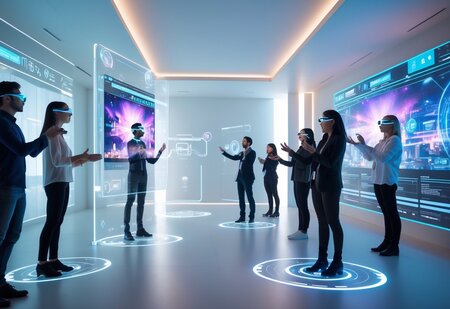
Digital entertainment in 2026? It’s not just about staring at a rectangle anymore. With immersive digital media, spatial computing lets us step inside the story, changing how we control, experience, and even define “being present” at events, games, or shows.
Immersion as the New Standard
We’re getting used to entertainment that wraps around us. Spatial computing brings everything into 3D, so sound, visuals, and even movement react to where we are and what we’re doing.
Sure, resolution and frame rate still matter, but now depth, scale, and how real things feel in space matter more. A concert’s better when you can sense the distance to the stage. A game’s fairer when objects actually stay put.
- Head and hand tracking for natural control
- Spatial audio matching location and movement
- Environments that persist as you move
How Apple Vision Pro and Quest 4 Changed Expectations
Apple Vision Pro set a whole new standard for clarity and spatial design. Suddenly, digital objects stayed put, and apps stretched across actual rooms instead of floating windows.
Quest 4, meanwhile, leaned into lighter hardware and longer sessions, with mixed reality that made movement part of playing. Full-body tracking and improved passthrough made the physical world matter again.
Now, we expect fast setup, reliable tracking, and content that works whether you’re sitting or standing. Developers? They’re building for space, not just screens.
Blurring Physical and Digital Boundaries
Spatial computing’s best trick is making digital stuff feel like it belongs in your room. Characters can sit on your couch, and virtual screens line up with your real walls.
It’s changing how we hang out, too. Friends can share a virtual space, even if they’re miles apart. Eye contact, gestures, and physical distance matter again.
- Watch parties with spatial seating
- Mixed reality games using your actual room
- Live events with virtual crowds and stages
All this depends on accurate mapping. When it works, digital presence just feels right.
Spatial Computing Fundamentals in Immersive Digital Media
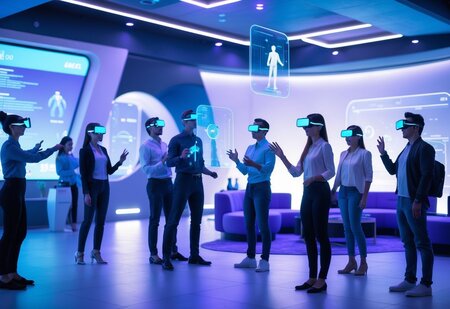
Spatial computing is totally changing how we watch, play, and interact with immersive digital media. In 2026, entertainment is a blend of 3D content, your real space, and real-time input, making everything more interactive and personal.
Core Technologies: AR, VR, and MR Explained
Three big things drive this: augmented reality (AR), virtual reality (VR), and mixed reality (MR). Each has a different flavor.
- AR puts digital stuff on top of the real world, think stats or characters floating in your living room.
- VR drops you into a completely digital world, concerts, games, cinemas, you name it.
- MR mixes both, anchoring digital elements to your real space. Virtual things react to your walls, furniture, and movement.
In 2026, most platforms combine all three. A sports broadcast might use AR for stats, VR for full immersion, and MR for hanging out with friends at home.
Real-Time Environmental Mapping
Spatial computing runs on real-time mapping. Devices scan your room with cameras, depth sensors, and motion tracking.
This lets digital stuff snap into place, screens stick to your walls, characters dodge your furniture, and sound changes depending on where you are.
It also means multiple people can see the same virtual thing in the same spot. That makes games and watch parties feel way more real.
Low latency is key. If visuals lag, people get dizzy, and that’s a dealbreaker for long sessions.
Natural User Interfaces in 2026
We’re not just using controllers anymore. Natural user interfaces are everywhere in immersive digital media.
- Hand gestures to grab or move stuff
- Eye tracking for navigating menus
- Voice commands for searching or controlling playback
This makes everything feel less like work and more like real life. You just reach, look, or speak, and things happen.
It means you get to the fun faster, especially during live events. You can pause, explore, or switch scenes without fiddling with menus.
180° Stereoscopic Video: The Leap from 2D to Immersive 3D
180° stereoscopic video is changing how we capture and watch immersive digital media in 2026. It uses depth-aware formats and simpler camera setups that work across most modern headsets.
Technical Advantages of 3D Video Formats
180° video records a view for each eye, so you get real depth, not some fake effect. You see distance and motion the way your eyes expect.
Compared to 360°, 180° puts more pixels where you’re actually looking. That means sharper images and less strain on your device. Most cameras now shoot 4K at 60fps per eye, making everything look crisp even when you move.
Standard formats use side-by-side video with VR metadata, so major headsets play them without hassle. That’s a win for creators and viewers alike.
New Storytelling Canvas for Creators
180° 3D gives creators more control, framing, lighting, and movement guide your attention, but you still get real depth. It’s perfect for concerts, documentaries, and stories that need focus.
Creators don’t need giant rigs, either. Dual-lens cameras line up with human eyes, and built-in stabilization keeps things comfy to watch.
- Natural depth cues for realism
- Clear focus without the distraction of a full 360°
- Faster editing with standard tools
Smaller teams can now make high-quality immersive content without breaking the bank.
VRcams.io: Exploring Modern Video Pipelines
Platforms like vrcams.io are showing what’s possible with modern VR video pipelines. The focus is on capture, format control, and direct-to-headset delivery.
- Native VR180 side-by-side exports
- Automatic metadata injection
- Instant playback testing on popular headsets
This streamlines everything from shooting to viewing. Creators can check depth and comfort before releasing anything. By standardizing tools and formats, platforms like vrcams.io make immersive digital media easier to produce and share. Smaller teams can now produce professional content by utilizing advanced VR camera technology that aligns with human eye-tracking standards.
Spatial Audio and Sensory World Building in Immersive Digital Media
Spatial audio is a game-changer for immersive digital media. It puts sound in 3D, so you know where things are, and ties audio to your movements.
3D Audio as a Narrative Engine
We use spatial audio to guide attention, no text needed. A sound behind you means you should turn around. A voice above you? Something’s happening up there.
This keeps stories moving. You follow audio cues through rooms and scenes, picking up hints as you go.
- Footsteps leading to clues
- Off-screen dialogue to pull your focus
- Environmental sounds marking scene changes
As you turn or walk, sound shifts in real time. That’s what makes scenes feel real.
Soundscapes for Engagement and Accessibility
Soundscapes set the mood fast. Layering ambient noise, voices, and effects tells you where you are, no need for menus or maps.
This helps new users get their bearings. Directional cues and audio landmarks make navigation easier, especially for people with low vision.
| Accessibility Feature | Practical Benefit
|
|---|---|
| Directional prompts | Easier navigation |
| Audio landmarks | Faster orientation |
| Clear voice placement | Less confusion |
We aim for clean mixes and steady levels. Complexity is cool, but clarity wins.
Emotional Cues Through Spatial Sound
Sound shows emotion, too. A whisper close by? Instant tension. An echo fading away? Feels lonely or vast.
Spatial audio reacts to what you do. Pause, and the audio softens. Rush forward, and it sharpens. It just feels natural.
- Proximity changes for intensity
- Low-frequency sounds for weight
- Silence for dramatic effect
We don’t fill every second with noise. Quiet matters, sometimes more than sound itself.
Haptics and Synchronized Feedback in Immersive Digital Media
Spatial computing now pairs visuals with touch, making immersive digital media feel physical. Haptics, real-time response, and perfect timing between sight, sound, and touch are taking center stage.
Integration with Wearables and Haptic Devices
Entertainment’s gotten a serious upgrade thanks to immersive digital media and Advanced VR camera technology. Now, we’re connecting systems to wearable haptic devices that let you feel touch, vibrations, pressure, even motion. Gloves, vests, wristbands, and seats all target different areas of the body, adding a layer of realism that’s hard to ignore.
Wearables only really work if they’re lightweight, wireless, and quick to respond. If they’re heavy or laggy, nobody wants to use them for long. Most consumer options are getting there, but there’s always room for improvement.
Common haptic devices and uses
| Device | Primary Use
|
|---|---|
| Gloves | Hand contact, object shape |
| Vests | Impact, direction, force |
| Wristbands | Alerts, rhythm, motion |
| Chairs | Movement, rumble, balance |
We tailor content to the device. A racing game might use seat rumbles, while a virtual concert pairs wrist pulses with the beat. It’s a bit of an art and a science.
### Creating Real-Time Physical Responses with Immersive Digital Media
Timing is everything in immersive digital media. If there’s a lag between what you see and what you feel, the illusion falls apart. Modern systems are finally hitting response times that feel genuinely natural, no weird disconnects.
We tie haptic feedback straight to live actions. Grab something in VR, and you feel it right then, not a second later. When footsteps hit, you get those little taps in sync. It’s subtle, but it really matters.
Developers lean on vibration patterns and pressure tweaks. These signals are power-efficient, easy to implement, and work across a bunch of devices. Plus, they’re practical for home use.
Some setups even send feedback to furniture or floors, letting multiple people share the same physical sensations. That makes group play or co-watching a whole new thing.
### Synchronized Feedback: Advanced VR Camera Technology and Haptics
Syncing haptics, audio, and visuals on the same clock is what makes immersive digital media so convincing. Even tiny timing errors can throw you off or make you feel queasy. It’s wild how sensitive the human brain is to this stuff.
We line up touch cues with specific events. A door slams and you feel a sharp jolt. Use a virtual tool, and there’s that steady hum in your hand. It’s not just background noise, it’s event-driven.
Key benefits of tight synchronization
- Clear cause-and-effect
- Better spatial awareness
- Less motion discomfort
When latency stays low and everything feels locked in, users actually trust what they’re experiencing. That trust is everything for making digital worlds believable.
AI-Driven Personalization: Curating Unique Immersive Digital Media Experiences
AI is changing the game for immersive digital media, letting entertainment adapt to each person in real time. Spatial systems read your behavior, tweak content through AI agents, and even pick up on emotional cues. It’s a little uncanny sometimes, but it keeps things relevant.
Eye-Tracking and Behavioral Analytics in Immersive Digital Media
Eye-tracking is a goldmine for figuring out what grabs your attention. Spatial headsets track where you’re looking, how long you linger, and how you move your head. It’s a constant feedback loop.
We mix this with basic behavior data, pauses, rewinds, exits. AI models use all of it to adjust scenes, menus, and pacing. You barely notice, but it’s always working in the background.
Common inputs and uses
| Signal | What it changes
|
|---|---|
| Gaze focus | Camera angle and scene depth |
| Dwell time | Content length and speed |
| Head movement | UI size and placement |
Privacy’s a big deal, obviously. Most platforms now process data on your device and store as little as possible. It’s not perfect, but it’s a step in the right direction.
Adaptive Content and AI Agents for Advanced VR Camera Technology
Adaptive content is where things get really interesting. AI agents watch what you do and pick the next scene, difficulty, or reward. In games, they tweak the story or ramp up the challenge if you seem bored.
In live events, agents might adjust lighting or camera angles based on engagement. Teams often use several agents, one for behavior, one for layout, another for timing. It sounds complicated, but when it works, you barely notice the machinery.
Key benefits of AI agents
- Faster response than manual controls
- Consistent changes across devices
- Clear rules that avoid random shifts
Designers still set boundaries. AI works within those lines to keep things from getting too weird or unpredictable.
Emotionally Responsive Entertainment in Immersive Digital Media
Some systems actually react to your mood, stress, excitement, whatever. They pick up on voice tone, how fast you move, and your interaction patterns. It’s not reading your mind, but it’s close enough to feel personal.
If you seem tired, the system dials down motion and sound. If you’re pumped, it ramps things up, but not to the point of discomfort. It’s most obvious in concerts and interactive stories, where music and visuals shift with your energy.
Typical emotional responses
- Slower pacing during overload
- Softer visuals during stress
- Richer detail during high focus
Again, you’re always in control. You can pause or reset personalization anytime. No one wants a system that takes over completely.
Collaborative and Social Dimensions in Immersive Digital Media Spaces
Spatial computing is changing how we hang out, play, and create together. Shared digital spaces now let us interact in real time, work remotely, and express ourselves through avatars that actually feel present. It’s a pretty wild leap from old-school chat rooms.
Multi-User Interactions and Digital Communities in Advanced VR Camera Technology
Immersive digital media spaces let tons of people join the same 3D scene. Watch shows, attend live events, or build worlds together, it’s all possible. These spaces work because of shared rules, clear roles, and tools that keep everything in sync.
Communities form around games, concerts, and fan spaces. Trust is managed with moderation tools, identity signals, and access controls. Accessibility is a big focus, captions, comfort settings, and simple navigation are becoming standard.
Key features we rely on:
- Real-time voice and gestures
- Shared objects and tools
- Community rules and moderation
Remote Collaboration in Virtual Worlds with Immersive Digital Media
Virtual worlds now make remote work and creative play way more engaging. Teams meet in 3D rooms, share screens, and pin notes in space. It’s easier to remember where ideas “live” when you can literally walk around them.
Entertainment teams rehearse shows, design sets, and test scenes in these worlds. Fans join in to remix content or solve puzzles together. Spatial cues, like distance and eye contact, help conversations flow more naturally.
Short sessions, simple controls, and clear exits help avoid fatigue. The goal is to keep things collaborative without overwhelming anyone.
Avatar-Based Presence and Digital Identity in Advanced VR Camera Technology
Avatars are our bodies in immersive digital media. Head, hand, and eye tracking show where we’re focused. Conversations feel more natural than a flat video call, sometimes almost too real.
Identity tools let us pick names, styles, and badges. Some events need verified IDs, others let you play around with masks. There’s a balance between expression, privacy, and safety that’s still a work in progress.
Common avatar signals:
| Signal | Purpose
|
|---|---|
| Gaze | Shows focus |
| Gestures | Adds emotion |
| Badges | Shows roles |
Industry Impact: How Immersive Digital Media and Advanced VR Camera Technology Transform Entertainment
Spatial computing is shaking up how media makes money, how teams work, and who’s included. By blending 3D visuals, real-time interaction, and physical presence, new ways to watch, shop, learn, and collaborate are popping up everywhere.
New Business Models and Monetization for Immersive Digital Media
Direct, in-experience commerce is now a thing. Viewers can buy items shown in a scene with a gesture, no more clicking away. Studios layer interactive features on live sports and concerts. Fans can pull up stats, switch camera angles, or unlock bonus content on the fly.
Common monetization formats include:
- 3D product placement for instant purchase
- Premium spatial events for at-home viewing
- Branded virtual spaces in shows or films
These models need high-quality 3D video and rock-solid streaming. As real-time spatial tech improves, live content gets more practical, and profitable.
Enterprise and B2B Innovations in Advanced VR Camera Technology
Media companies are using spatial tools for way more than just entertainment. Enterprise applications are booming, production, training, collaboration, you name it.
Studios plan scenes, block camera moves, and review sets in 3D before filming. That means fewer reshoots and faster decisions. Other uses include:
- Virtual training for broadcast teams
- Remote collaboration in shared 3D workspaces
- Simulation and rehearsal for live events
Industries like healthcare and manufacturing already use this stuff, so it’s not just hype. Media companies are catching up fast.
Accessibility and Inclusion in Immersive Digital Media
When done right, immersive digital media can be more accessible than old formats. Multiple input methods, voice, eye tracking, hand gestures, open doors for users with mobility or vision challenges. Good spatial audio helps, too.
Design teams prioritize:
- Adjustable text size and contrast
- Audio cues tied to action
- Comfort settings to prevent motion sickness
Headsets still have downsides, price and weight are big ones. But lighter devices and better streaming should help more people join in soon.
Challenges and Future Outlook for Immersive Digital Media in 2026
Spatial computing is changing how we watch, play, and interact, but there are still some big hurdles. Cost, trust, and compatibility will decide how quickly immersive digital media goes mainstream.
Hardware Costs and Adoption Barriers with Advanced VR Camera Technology
High hardware prices are still the biggest roadblock. Many spatial experiences need headsets, sensors, and powerful chips, way pricier than regular screens. Upgrades come fast, so devices don’t last as long as you’d hope.
Comfort and user-friendliness matter, too. Heavy headsets lead to fatigue, and tricky setups turn people off. There are also big gaps in access depending on where you live and what you can afford.
Key barriers we face:
- High upfront device costs
- Short upgrade cycles
- Comfort and fit issues
- Limited retail and support access
Studios and platforms are working on lighter gear and offering rentals or bundles. It helps, but honestly, price is still the main thing holding people back.
Data Privacy and Security in Immersive Digital Media
Immersive digital media, especially those using advanced VR camera technology, gather a surprising amount of personal data. Movement, voice commands, eye tracking, even detailed scans of your living room, get collected as part of the experience.
If this info falls into the wrong hands, it could reveal your routines or even your home’s layout. No one really wants that kind of exposure, right?
Entertainment platforms are under pressure to lock down this data at every stage. One slip-up, and user trust can vanish overnight.
It gets trickier since privacy laws change depending on where you are in the world. That’s a headache for companies planning global launches.
Key areas needing robust protection:
- Transparent consent for data capture
- Processing data locally whenever possible
- Securing storage and transfers with strong encryption
- Giving users straightforward privacy controls
Honestly, finding the sweet spot between jaw-dropping digital experiences and tight data boundaries isn’t easy. Still, it feels like trust will decide which immersive platforms stick around in the long run, more than any fancy feature ever could.
Standardization and Interoperability in Immersive Digital Media
Immersive digital media, powered by advanced VR camera technology, still faces hurdles with fragmented systems. Devices, engines, and file formats rarely play nicely together.
This fragmentation means creators have to redo their work for every new platform, which is honestly exhausting. Costs go up, releases get delayed, and, let’s be real, users often get stuck in closed-off ecosystems.
What should standardization actually include?
- File formats for sharing 3D assets
- Input and gesture controls that feel natural across devices
- Identity management and avatar consistency
- Seamless playback across multiple platforms
Industry groups and big tech players are starting to push for shared frameworks in immersive digital media. Progress is slow, but the level of alignment here will shape how open and accessible this space becomes.