
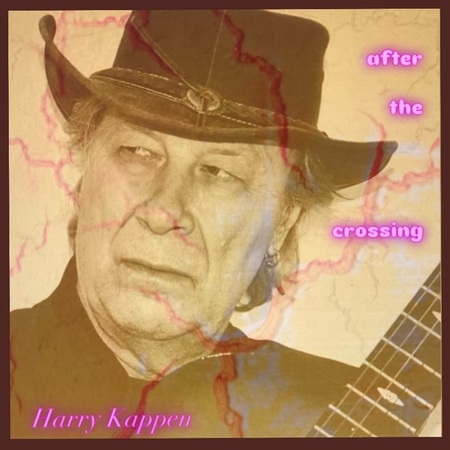
Rock and roll has always thrived when it carries more than a backbeat. At its best, it reflects the times, questions authority, and reminds listeners that music can still be a moral compass. On After the Crossing, Dutch-born singer-songwriter Harry Kappen delivers a record that embraces that tradition, crafting an album that blends personal migration, social commentary, and melodic craftsmanship into a thoughtful and emotionally grounded rock statement.
The album arrives following Kappen’s relocation from Europe to Mexico, and that sense of transition pulses through nearly every track. Opening with the lead single “Balance,” Kappen wastes little time addressing modern polarization. The song doesn’t shout slogans or lean into easy protest clichés. Instead, it asks listeners to consider the complexity of ideological extremes, advocating for dialogue and understanding. The track is anchored by steady instrumentation and melodic clarity, recalling the tradition of socially conscious rock that values message as much as musical structure.
“No Delays” continues the autobiographical thread, capturing the urgency that often accompanies life-altering decisions. The song moves with purpose, driven by crisp guitar work and confident vocal delivery. It’s rock storytelling in its classic form—personal experience translated into universal feeling. Kappen’s strength lies in his ability to balance introspection with accessibility, allowing listeners to find themselves inside his narratives.
The album’s romantic core emerges in “We’re Going to the Max” and “While Life’s Rushing By,” two songs that explore devotion without drifting into sentimentality. These tracks reinforce the album’s recurring theme: that love, like migration, demands risk and resilience. Kappen treats these subjects with sincerity, supported by arrangements that favor melody over excess.
“Distant Shore” stands as one of the album’s most ambitious compositions. Drawing attention to the refugee experience, the song uses vivid storytelling to humanize displacement and survival. It avoids melodrama by focusing on emotional realism, aligning with rock’s historical role as a vehicle for social awareness. Kappen demonstrates that protest music doesn’t have to abandon musical sophistication to remain impactful.
http://www.hypeddit.com/harrykappen/afterthecrossing
Elsewhere, “The Real Thing” and “Good Samaritans” tackle modern cultural contradictions. The former questions authenticity in an age of misinformation and digital performance, while the latter honors everyday individuals who act with compassion rather than self-promotion. Both tracks reinforce Kappen’s belief that rock music can still serve as cultural reflection rather than mere entertainment.
Musically, After the Crossing draws from alternative rock and classic singer-songwriter traditions while incorporating subtle progressive textures. Kappen’s decision to perform and produce nearly every element himself results in a cohesive sonic identity that emphasizes authenticity over studio excess.
The album closes with “Now,” a restrained and contemplative track that underscores the record’s central message: life is fleeting, and meaning is found in presence. It’s a fitting conclusion to a record shaped by movement, reflection, and emotional clarity.
With After the Crossing, Harry Kappen demonstrates that thoughtful rock music remains vital. The album doesn’t chase trends or nostalgia. Instead, it stands firmly in the present, proving that rock’s conscience is still alive and worth listening to.
–David Marshall