
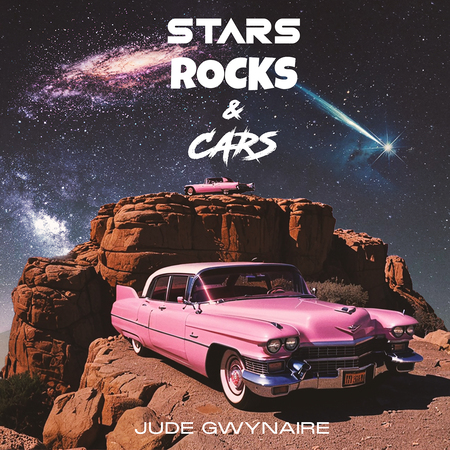
UK-based composer and author Jude Gwynaire delivers one of his most expansive and outward-facing albums to date with “Stars, Rocks and Cars.” Ambitious in its undertaking, fans of Gwynaire’s earlier work will note that this record is rooted in his long-standing experimental instincts while being noticeably more song-driven.
Thematically, Stars, Rocks and Cars is preoccupied with movement and observation. It attempts to capture the mood of driving through cities, passing landmarks, fleeting encounters, and moments of reflection caught between destinations. There’s a strong visual quality to the composition, and even without lyrics, it evokes images of suburban sprawl, and nocturnal introspection.
Stars, Rocks and Cars sits comfortably in the orbit of cinematic alternative music, but it resists being boxed into a single lane. There are echoes of classic instrumental rock, touches of psychedelia, and moments that feel almost soundtrack-like in their pacing and tonal shifts.
The album opens with “Night Drive Through My City Notorious,” one of its strongest statements. A thumping, jazz-inflected nocturnal journey, the synths create bright woodwind textures and piano chords set to a jagged, urgent rhythm. Its retro character and dynamic pacing make it an instant attention-grabber and a standout moment on this album.
“Star-Spangled Alice” is one of the heavier moments on the album and probably it’s most visceral track. This is Gwynaire in full rock-out mode letting loose with his Epiphone Les Paul pushed through a Big Muff pedal. The track is raw, unapologetic, and thrillingly direct; a sharp contrast to the album’s more delicate or atmospheric moments.
The album closes with “The Church of the False Martyr,” a deeply unsettling track that features ethereal chants, church bells, and organ to create a chilling, otherworldly atmosphere. It’s an effective and memorable finale that reinforces the album’s fascination with night, shadow, and mood.
The production on this album is perfectly done, highlighting the musicianship without overshadowing it. The arrangements feel intentional and paced while the sound is polished but not overly glossy, preserving a sense of intimacy and grit.
Stars, Rocks and Cars is a confident and engaging step forward for Jude Gwynaire. It balances experimentation and structure, creating an album that feels cinematic, personal, and thoughtfully assembled. Longtime listeners will not be disappointed with this evolution, and for newcomers, it may well be the most approachable entry point into his catalog so far.