



Why Ordinary Names May Get Flagged by Blackcat and Other Provider
A payment account can be restricted because a name resembles a name on a sanctions list. Not matches it — resembles it. This is one of the least intuitive reasons an account can be held, and it accounts for a meaningful share of the cases where a customer with no connection to anything untoward finds a payment stopped and no explanation forthcoming.
A Blackcat account blocked with no reason given, like the same outcome at any other EU-licensed provider, can have this among its possible causes. Screening is not something a provider opts into, and a name match is not something a customer can avoid by behaving differently.
The mechanism is worth understanding, because it is the one restriction cause where the customer has done nothing at all, and where knowing how the process works changes what you should send.
What providers are required to screen, and how often
EU sanctions are binding on payment providers directly. Where a person or entity is designated under a targeted financial restrictive measure, their assets must be frozen and no funds may be made available to them. There is no discretion in this and no risk-based softening; a designated party is a designated party.
The obligation attaches to the licence rather than to the size of the firm. It covers electronic money institutions on the same terms as banks, so it applies to Papaya Ltd, the Maltese issuer of Blackcat. (Papaya, Ltd. is licensed by the MFSA as an Electronic Money Institution, registration No. C55146.)
The frequency changed recently, and in a way most customers never heard about. Under Article 5d of the SEPA Regulation as amended by the Instant Payments Regulation, from 9 January 2025 payment providers across the EU must verify at least daily whether their own customers are subject to targeted financial restrictive measures, and must re-screen immediately whenever the EU designates a new party or amends an existing designation. The same provision prohibits providers from running transaction-by-transaction sanctions screening for in-scope euro credit transfers.
That reversal is the key to understanding the customer experience. The old model screened payments, which slowed them down and generated alerts at the moment of payment. The new model screens people continuously, which is what allows a euro transfer to settle within ten seconds.
The consequence is that when an alert does fire, it fires against you as a customer rather than against a single transaction, and the effect is account-level rather than payment-level. Because the alert is attached to the customer relationship, it can also affect access to a crypto card while the review is open.
Why a false match happens to ordinary people
Screening systems do not look for exact string equality. They cannot, because a system that only caught exact matches would be defeated by a single changed letter. So they use fuzzy matching across transliterations, name orders, common spelling variants and phonetic similarity, then apply a threshold.
The threshold is where the trade-off lives. Set it tight and designated parties slip through under a variant spelling. Set it loose and ordinary customers generate alerts. Providers set it loose, because the cost of missing a designated party is a regulatory breach and the cost of a false positive is an inconvenienced customer and some review work.
The categories of person most affected are predictable. Names transliterated from Cyrillic, Arabic, Persian or Chinese scripts, where multiple valid Latin spellings exist for the same name. Common surnames in regions with designated individuals.
Patronymic naming systems that a matching engine reads as a middle name. A shared date of birth alongside a partially matching name. None of these is a fault on the customer’s part, and none of them can be prevented in advance.
A concrete case of how this looks in practice. A software engineer in Berlin, a German citizen born in Kazakhstan, has a surname with three accepted Latin transliterations. One of those spellings is close to a name on the EU consolidated list. Every time the list is amended, her record is re-screened, and periodically it produces an alert that a human has to look at before her account resumes normal operation.
How a false match is cleared
Resolution is a discounting exercise. The reviewer is not trying to prove you are innocent; they are trying to establish that you are a different person from the designated party. That is done on identifiers rather than on assurances.
- Full name exactly as it appears on your identity document, including any middle names.
- Date and place of birth, which is usually the single most effective discriminator.
- Nationality and the number of the identity document relied on.
- Where relevant, evidence of residence over the period concerned.
What does not help is an explanation of why the match must be wrong. A statement that you have never been to a particular country cannot be verified and does not discount anything. A date of birth that differs from the designated party’s by eleven years can be checked against a document and closes the question.
A restriction arising from a sanctions alert is also the type least likely to come with a detailed explanation while it is open. Providers are generally reluctant to say which list produced an alert or what the matching criteria were, partly because that information would help someone deliberately evade screening. This reticence is frustrating and it is not evidence that something worse is going on.
Where the limits of the system sit
Two structural points are worth knowing. First, the daily screening obligation applies to EU designations. Providers operating internationally may also screen against other regimes, which can produce alerts with a different basis and a different resolution path.
Second, because in-scope euro credit transfers are no longer screened transaction by transaction, providers depend on each other. Your provider ensures you are not a designated party; the receiving provider does the same for the payee.
A payment can therefore still be stopped at the other end, by an institution you have no relationship with, for reasons your own provider cannot see or explain.
| Transaction screening | Customer screening | |
| What is checked | Each payment’s payer and payee | The provider’s own customer base |
| When | At the moment of payment | At least daily, plus on every list change |
| Effect of an alert | That payment is held | The account relationship is reviewed |
| Status for in-scope euro transfers | Prohibited | Required |
Two models of sanctions screening for Euro credit transfers, before and after Article 5d of the amended SEPA Regulation.
Source: Regulation (EU) 2024/886 amending Regulation (EU) No 260/2012; obligations applying from 9 January 2025.
Frequently asked questions
Why would my account be blocked over a sanctions list if I have done nothing?
Screening systems use fuzzy name matching rather than exact matching, so a name resembling a designated party’s name can generate an alert. Resolution turns on identifiers such as date and place of birth that distinguish you from that party.
How often are payment customers screened against sanctions lists?
Since 9 January 2025, EU payment providers must verify at least daily whether their customers are subject to targeted financial restrictive measures, and must re-screen immediately after any new or amended designation.
Why will my provider not tell me which list flagged me?
Providers generally limit what they disclose about screening criteria, in part because detailed information would assist deliberate evasion. The absence of an explanation is not in itself an indication of a more serious problem.
This article describes sanctions screening obligations applying to payment service providers in the European Union and the false-positive matches those systems can produce. It is general information and not legal advice. Sanctions law is complex, changes frequently, and its application to an individual case depends on facts that this article cannot address. Anyone whose account has been restricted in connection with a sanctions alert should follow their provider’s stated process and consider independent legal advice where the matter is not resolved.
arms around the world’s ‘right now’ Sounds Like a Night Drive You Never Want to End
‘right now’, the latest single from Seattle’s arms around the world, is a stretch of empty highway after midnight, the dashboard glowing and the radio turned just a little too loud.
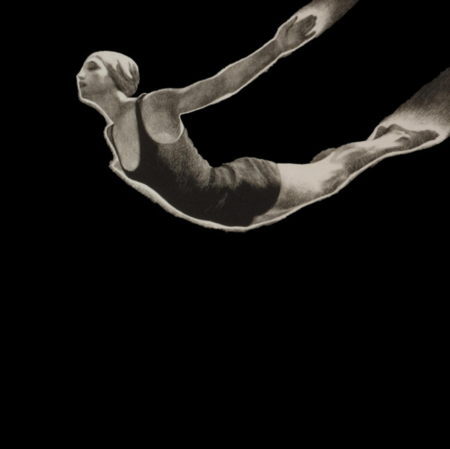
The first thing you notice is the guitar, and it’s a wonderful, slightly unruly thing. It doesn’t shimmer so much as scrape, a vintage tone with grit under its fingernails that keeps leaning forward as though the song might tip over if it ever stopped. There’s a Bowie-in-Berlin chill to it, all cold neon and clenched jaw, but it’s never cold in a way that keeps you out. It pulls you closer instead.
Then the voices arrive, and the whole thing changes temperature. Harmonies folded gently around it, sounds like a window opening in a locked room. It’s soft and a little hazy, almost like remembering a dream while you’re still inside it. That tug-of-war between the abrasive and the beautiful is where the song lives, and it’s the moment I kept rewinding to, because it feels so honestly human.
The repetition could have been a risk, but here it works like a heartbeat. By the third or fourth pass, the lines stop being words and start being a feeling, urgent and a little aching, the sound of wanting something you can’t quite name.
If this is the opening statement, connection looks set to be a special one. Recorded largely live between Seattle and Paris, it promises the thrill of musicians reacting to each other in real time, flaws and all. January 2027 can’t come soon enough.
https://open.spotify.com/track/5izUlsLx0r5oo0oUOkZSbn?si=46417fb5ba934751
The Heavy North Find Their Spark on Soulful New Single ‘Alive’

Liverpool blues-rock outfit The Heavy North return with Alive, a soul-charged new single that captures the heady rush of infatuation, pairing the band’s gritty rock ‘n’ roll foundations with an emotional openness that adds another dimension to their sound.
Built around the uncertainty of falling for someone without knowing whether the feeling is mutual, Alive explores the fine line between vulnerability and exhilaration. Rather than getting lost in doubt, The Heavy North focuses on the moments when attraction takes over and the outside world seems to fade away. It’s a universal theme delivered with the conviction and passion that have become hallmarks of the band’s approach.
The track arrives with a growing sense of anticipation around the group’s third studio album, following the chart impact of 2023’s Delta Shakedown. That record marked a significant milestone for the independent Liverpool outfit, earning multiple Official UK Charts entries and reinforcing their reputation as a formidable live act. Their subsequent headline show at Camp and Furnace, captured on the live release Fire In The Furnace, further demonstrated the strength of a band built to connect with an audience.
Recorded at guitarist and producer Jose Ibanez’s 3rd Planet Recording Studio in Granada, Spain, during sessions for the forthcoming album, Alive reflects a band continuing to develop its sound while retaining the blues-rock and soul influences at its core. Additional recording in Liverpool with drummer Mark Rice, followed by mastering from Martin Kuchta at Roughgrain Mastering, brings the production process together across the band’s two creative bases.
The accompanying video also keeps Liverpool firmly at the centre of the story. Filmed at The Kazimier Stockroom, it plays with the band’s identity as a live unit, creating the impression of The Heavy North watching another version of themselves perform. It’s a fitting visual concept for a group whose reputation has been shaped by the energy and immediacy of the stage.
Since forming in 2018, The Heavy North have steadily established themselves within Liverpool’s independent rock scene. Early support from the late broadcaster Janice Long helped bring their music to wider attention, while the progression from debut album Electric Soul Machine to Delta Shakedown has demonstrated a band willing to build its audience on its own terms. The addition of bassist George Favager of The Mysterines in 2025, alongside Ibanez’s move to Spain, has brought further change to the group’s creative landscape.
With Alive, The Heavy North offers a glimpse of what’s to come without losing sight of what makes them compelling. It’s a song about desire, connection and the uncertainty that comes with putting your feelings on the line, delivered by a band whose blues-rock foundations remain firmly intact. As work on their third album continues, the single signals a group still moving forward, balancing the raw spirit of rock ‘n’ roll with a more personal emotional focus.
From Classical Virtuosity to Electronic Seduction: Avohee Avoher Reinvents the Dance Anthem with “I Want It Now”

The Accomplished Musician Brings Classical Precision, European Sophistication and Contemporary Electronic Energy Together in a Bold New Recording
Great musicians understand that the most powerful musical experiences often emerge when seemingly different worlds collide. For Avohee Avoher, that intersection is where classical discipline meets the limitless possibilities of contemporary electronic music.
His release, I Want It Now, is an exhilarating demonstration of that creative philosophy, combining the sophisticated instincts of a classical virtuoso with the rhythmic intensity, sensual atmosphere and emotional immediacy of European dance music.
The result is a recording that feels simultaneously refined and rebellious.
Avohee Avoher has devoted his musical life to understanding the relationship between composition, performance and emotional expression. That background gives him a distinctive perspective on electronic music, a genre sometimes misunderstood as depending more on technology than musicianship.
With I Want It Now, he challenges that assumption.
The recording moves at a commanding 138 beats per minute, propelled by a rolling bassline, hypnotic analogue textures and carefully constructed rhythmic layers. Yet beneath its club-oriented exterior lies a sophisticated understanding of musical architecture.
Every transition serves a purpose. Every new texture contributes to the atmosphere. The tension builds deliberately, allowing the listener to experience the music as an evolving journey rather than a collection of repetitive electronic patterns.
The song’s vocal performance introduces another compelling dimension.
An intimate female voice moves between English and German, creating an atmosphere of international sophistication and unmistakable sensuality. The lyrics explore the moment when attraction becomes impossible to ignore, transforming uncertainty into an urgent declaration of desire.
The central phrase, “I want it now,” is direct, memorable and emotionally charged.
What makes the recording especially interesting is the contrast between the restraint of its musical construction and the uninhibited emotions expressed through its vocals.
Avohee Avoher uses control to create the sensation of losing control.
That artistic contradiction gives the track much of its personality.
The production also reflects the influence of Berlin’s electronic music culture, where experimentation, intensity and individuality have helped shape the international dance music landscape.
Rather than attempting to reproduce an established formula, Avohee Avoher brings his own musical identity to that environment.
The result is an electronic recording with a recognizable sense of purpose, combining contemporary production techniques with an appreciation for the compositional principles that have defined great music across generations.
I Want It Now has received outstanding early DJ feedback through Power Promotion, an encouraging response as the track begins reaching electronic music audiences.
The release also offers a fascinating contrast with Avohee Avoher’s broader musical interests, including Caelune, his work associated with the classical piano tradition.
That range demonstrates an artist unwilling to be confined to one genre or creative identity.
For listeners familiar with his classical work, I Want It Now reveals a more provocative and rhythm-driven side of his musicianship. For electronic dance music fans discovering him for the first time, it introduces an artist whose musical foundations extend far beyond the club environment.
Ultimately, I Want It Now is more than an exercise in musical versatility.
It is a statement about artistic freedom.
Avohee Avoher understands that music does not need to choose between sophistication and physical excitement, between intellectual craftsmanship and emotional abandon.
Sometimes the most memorable recordings are those that embrace both.
With I Want It Now, he has created an electronic anthem that celebrates desire, musical imagination and the thrill of stepping outside familiar boundaries.
Discover the music:
Avohee Avoher YouTube: https://youtu.be/M4SVTvxxJZo
Stream “I Want It Now” by Avohee Avoher on Spotify here:
https://open.spotify.com/album/1vIWCZi0ssxPsoAL701eEE?si=daTxPl3HT4-buMWuWmWWvg
Lili Caseley Takes Her International Music Career to New Heights with “I Cry Again”

With Millions of Streams, Major Songwriting Collaborations and Credits Across Film and Television, the Rising International Artist Unveils Her Latest Single Worldwide October 23
International singer-songwriter and actress Lili Caseley continues her remarkable journey through the entertainment industry with the worldwide release of her new single, “I Cry Again”. The release introduces another chapter in the career of a versatile performer whose creative accomplishments already span music, television, film and international live performance.
For Caseley, music has become more than a means of artistic expression. It is the foundation of a career built around collaboration, creative exploration and an ability to connect with audiences across different cultures and entertainment platforms.
With more than four million independent catalog streams to her name, Caseley has demonstrated that her music can reach listeners far beyond her immediate surroundings.
Her songwriting contributions have also achieved significant international exposure. She holds a songwriting credit on Culture Shock’s global hit “Renaissance,” a recording that has generated more than 22 million streams.
That achievement places her within an increasingly competitive international music landscape where successful songwriting can open doors to new audiences, collaborations and creative opportunities.
Caseley’s professional experience includes writing alongside Rob Davis, whose work is associated with international pop superstar Kylie Minogue, and Ricky Polo, whose credits include Kendrick Lamar.
Working within these accomplished creative circles has helped establish Caseley as a songwriter with the versatility to navigate different musical styles and artistic approaches.
Now, with I Cry Again, she brings renewed attention to her own recording career.
The single’s title immediately suggests an intimate emotional journey, evoking the complicated feelings that accompany heartbreak, memories and the moments when emotions unexpectedly return.
Its accompanying cover artwork reinforces that sense of introspection. Featuring Caseley in an elegant, softly illuminated portrait, the visual presentation embraces understated sophistication rather than elaborate spectacle.
The image suggests an artist comfortable allowing emotion and personality to occupy center stage.
Beyond her recording career, Caseley has also established herself as a multifaceted entertainment professional.
Her acting credits include featured work in the acclaimed television crime drama Gangs of London, while her music has appeared across major broadcasting and entertainment platforms including Sky TV, TNT Sports, BBC Three and Sony Music Japan.
She also wrote the official theme song for the feature thriller Carma, demonstrating the growing relationship between her musical abilities and cinematic storytelling.
In another notable connection to the film industry, Caseley was cast to visually portray the character Hope for cinematic set designs associated with acclaimed filmmaker Alejandro G. Iñárritu’s Digger, starring Tom Cruise.
These experiences highlight the breadth of her creative interests and her willingness to explore opportunities beyond traditional recording and performance.
Her live career has been equally impressive.
Caseley has sold out four headline performances in London, appeared at the legendary L’Olympia in Paris and recently brought her music to New York City with a showcase at Club Groove.
Performing across these major international cities has helped her develop a presence that reflects the increasingly global nature of today’s music business.
Her talent has also attracted recognition from influential music industry figures and publications.
Caseley received DJ Target’s “UK Unsigned Single” selection on BBC Radio 1Xtra and was featured as a Music Week “Artist to Watch” by Notion managing director Nicolas Douglas.
Her career has additionally received attention from respected music publications CLASH and Complex.
Most recently, she was announced as a FENIX360 Artist Ambassador, adding another dimension to her growing professional profile.
The campaign for I Cry Again is being guided by manager John Velasco of MD25 alongside renowned UK producer Donae’O, bringing established music industry experience to the release.
As the global music industry continues to evolve, artists who can combine songwriting ability, performance experience and a recognizable artistic identity are increasingly positioned to build lasting careers.
Lili Caseley’s accomplishments suggest an artist determined to explore all three.
Her international performances, substantial streaming achievements and work across major entertainment platforms have created a foundation for continued artistic growth.
With I Cry Again, Caseley returns to the spotlight with a release that invites listeners to discover another side of her creative personality.
For existing fans, the new single represents the next step in her musical journey. For audiences encountering her work for the first time, it offers an introduction to an artist whose professional experience reaches from London and Paris to New York and the international film industry.
Lili Caseley’s “I Cry Again” is now available worldwide.
About Lili Caseley
Lili Caseley is an international singer-songwriter and actress with more than four million independent catalog streams and a songwriting credit on Culture Shock’s “Renaissance,” which has accumulated over 22 million streams. Her career includes collaborations with acclaimed songwriters, appearances in television and film, music placements across international broadcasters and sold-out live performances in London.
Stream “I Cry Again” by Lili Caseley:
SMA Takes Her DIY Pop Vision From Home Studio to “Goodnight and Goodbye” Video

From self-recorded vocals to hands-on styling, the VOICEMAILS artist is building her sound and image on her own terms.
OFFICIAL VIDEO: https://youtu.be/OGhM-XcqjcA
For Simone Nicole, professionally known as SMA, independence is more than a label. Her song “GOODNIGHT AND GOODBYE” began with an instrumental by Mantra Beats, lyrics she wrote herself and vocals she recorded at home using a Volt 2 interface, an Audio-Technica 2020 microphone and Ableton.
Musician Richard Baca handled mixing and mastering with SMA. According to her original September press release, the final vocal recordings used neither Auto-Tune nor Melodyne, a milestone she associates with her own vocal development.
Released as a single September 19, “GOODNIGHT AND GOODBYE” is actually the last chapter of SMA’s forthcoming VOICEMAILS project. The music is designed to arrive in reverse narrative order, beginning with the clarity that follows a difficult relationship and then revealing the emotional journey behind it.
“I want people to feel empowered: not only to let go of what no longer serves them, but to embrace who they want to be and step into their power,” SMA said in the release.
Her first official music video, premiering October 23, continues that hands-on approach. SMA styled the production and co-produced it with Anamore Productions; Samantha Boubel is credited with videography and lighting. The Y2K aesthetic draws on SMA’s interest in fashion, thrifting and vintage accessories.
The original visual plan also incorporated a fairytale counterpart, underscoring the idea of becoming a new version of oneself.
The project also has a connection to N.I. Music Group and Eric T. Johnson, whose involvement with SMA has been confirmed by her publicist. Johnson, the group’s founder and chief creative officer, brings experience as a songwriter, performer and artist-development executive. Previously one-half of the pop-rock duo SHYTOWN, he has performed across North America and Europe and worked on music projects involving established recording artists. SMA’s original press release separately credits Mantra Beats for the instrumental and Richard Baca for mixing and mastering.
SMA is developing VOICEMAILS alongside two other projects she calls her “baby albums,” while working toward a live show and touring. For listeners discovering her now, the new video is a starting point for a story that intentionally begins at its conclusion.
WATCH THE OFFICIAL VIDEO: https://youtu.be/OGhM-XcqjcA
EDITORIAL REVIEW NOTE (remove before submission): Eric T. Johnson / N.I. Music Group background is included as general industry context only; no SMA project affiliation was verified. Confirm whether this paragraph belongs in the final article.
Robert Hinrichs Finds Freedom In Motion On ‘The Road’
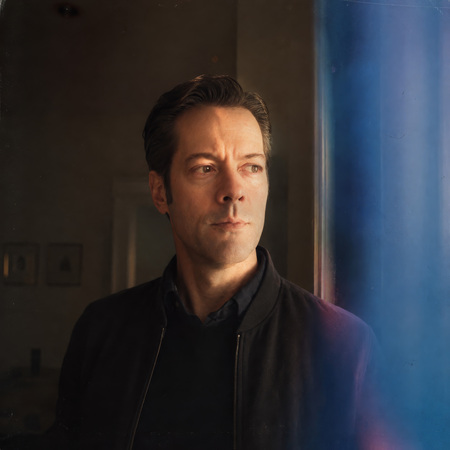
Robert Hinrichs finds a certain freedom in forward motion. New single ‘The Road’ takes the songwriter and producer’s knack for colourful, intricately assembled pop and gives it a fresh sense of purpose, turning personal upheaval into something genuinely life-affirming. Part synth-pop rush, part funk-fuelled adventure, it begins in reflective territory before opening out into a euphoric celebration of simply moving on.
There’s a theatrical streak running through the track, with shades of Scissor Sisters’ flamboyant dancefloor energy and Mika’s knack for unabashed melodic uplift. Yet Hinrichs isn’t interested in easy nostalgia. Bright synths and a propulsive rhythmic backbone give ‘The Road’ its immediate appeal, while the production’s more unexpected details keep things interesting beneath the surface. It’s pop with a restless streak, built for both the first listen and the details that reveal themselves further down the line.
That sense of movement feels especially significant given the circumstances surrounding its creation. The first track Hinrichs produced after moving into a new studio, ‘The Road’ arrived alongside a fresh technical setup and a personal reset. The end of a stressful relationship had pulled him away from music, making the return to his creative practice feel like an act of rediscovery. Rather than dwelling on the breakup itself, he focuses on the strange exhilaration of life beginning to open up again, even when the destination remains unclear.
It’s an approach that reflects Hinrichs’ wider musical philosophy. His songs are constructed with an engineer’s precision, balancing melodies, rhythms and layers of electronic texture until the individual components begin to take on a life of their own. Drawing from new wave, neo-soul, funk and classic pop, he brings an expansive musical vocabulary to his work without losing sight of the fundamentals. The songwriting remains the anchor, even when the production takes a more exploratory route.
That balance has become increasingly apparent across his catalogue, particularly on ‘Shadow to Color’, an album that brings together polished pop craftsmanship and a more adventurous approach to arrangement. Hinrichs has long been fascinated by the mechanics of recording, having started out experimenting with tape decks, early synthesisers and whatever equipment he could get his hands on. That curiosity still informs his music, lending it a carefully constructed quality that never feels entirely predictable.
“‘The Road’ is about trusting motion before certainty,” Hinrichs explains. “The moment moving forward becomes its own way home.”
It’s a sentiment that captures the single’s appeal. Beneath the buoyant production lies a more complicated emotional truth, one that acknowledges the uncertainty of starting over without allowing it to dictate what comes next. ‘The Road’ doesn’t pretend that moving forward is always straightforward; instead, it finds something liberating in the decision to keep going. For Hinrichs, this is a creative reset that feels less like closing a chapter and more like discovering just how far the next one might take him.
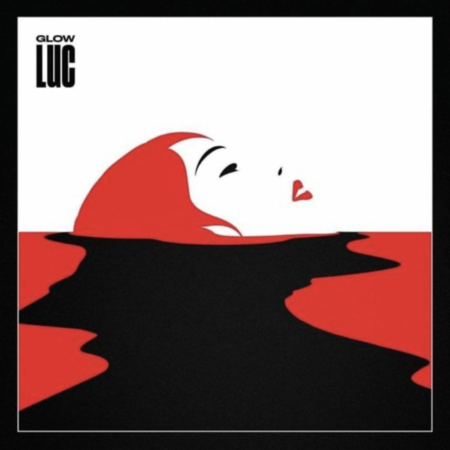
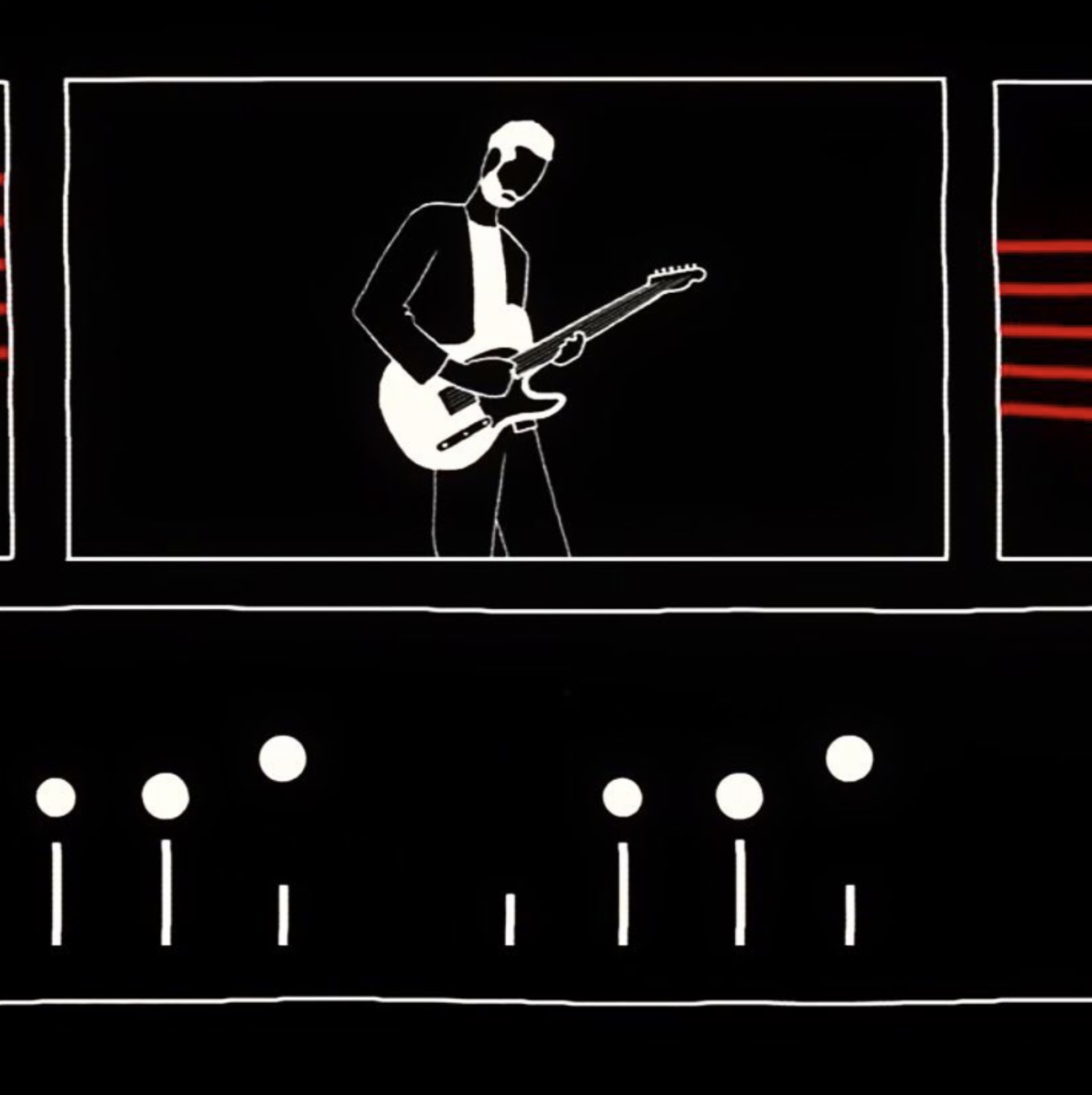
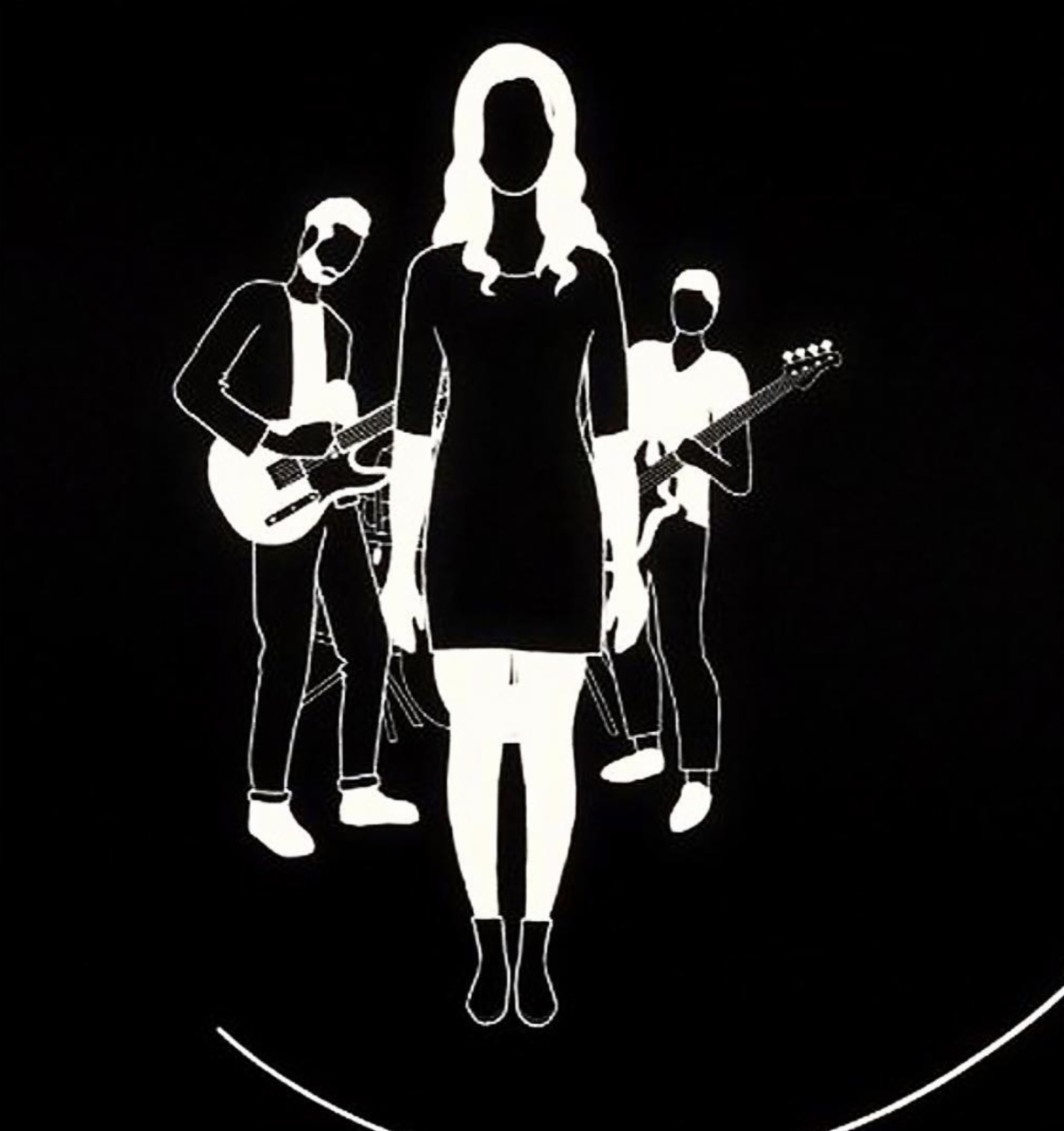
LUC distribute the official music video “GLOW”
|
|

|



|
|

|
|

|
|
|
|

|

|

|



|
|


|
|

|
|
See Your Shadow’s “Weekend (Can’t Get Here Soon Enough)” Turns the Working Week Into a Country-Rock Celebration

By John Parker
The weekend has always occupied an outsized place in American popular music. It represents more than an interruption of the workweek; it’s a recurring promise of personal freedom, an opportunity to exchange obligation for pleasure. On “Weekend (Can’t Get Here Soon Enough),” arriving October 30th, Phoenix-based country collective See Your Shadow approaches that familiar subject with a combination of musical exuberance, deliberate simplicity, and an understanding of how repetition can transform an everyday complaint into an anthem.
Led by songwriter and music director Michael Coleman, See Your Shadow has established itself as an independent country act willing to move between emotional storytelling and stylistic experimentation. Its previous single, “Another Saturday,” reached No. 1 on the Independent Music Network’s Country Songs Chart, continuing the collective’s impressive run of chart success.
The new release represents a calculated change in direction. Where “Another Saturday” examined the emotional complications surrounding a weekend, “Weekend (Can’t Get Here Soon Enough)” celebrates the anticipation of one.
There’s an interesting history behind the recording. An earlier version appeared on See Your Shadow’s pop album A New Era, but Coleman believed the composition had unexplored potential. Recasting it as a country-rock number changes its musical identity while preserving its central message.
The song opens with an observation so ordinary that it becomes instantly recognizable: “Same Friday routine / Wishing it was five o’clock instead of three.”
That modest premise establishes the song’s entire emotional trajectory. The narrator isn’t searching for transcendence or attempting to escape a troubled relationship. He’s waiting for the clock to release him.
The second verse introduces a slightly sharper observation about workplace behavior: “Fake smile on your face / Lying when you say have a nice day.” Beneath the cheerful weekend countdown lies a small acknowledgment of the compromises people make to navigate their working lives.
Coleman doesn’t develop that tension into social commentary. Instead, he directs it toward the chorus, where the title phrase returns with almost obsessive insistence.
Repetition is the song’s primary structural device. Rather than advancing a complicated narrative, the chorus transforms a simple desire into something communal. The invitation, “If you feel me let me hear you say,” emphasizes the recording’s intended relationship with its audience.
https://open.spotify.com/artist/7HCKg0W23gnvr1DXiNZ8ep
Coleman has explained that he wanted the studio production to capture the atmosphere of a live performance. That’s an intriguing ambition for See Your Shadow, which operates primarily as a recording collective rather than a conventional touring band.
The arrangement’s concept emphasizes collective energy over individual introspection. Its country-rock framework gives the song a more direct, participatory identity than its earlier pop incarnation, while the Network of Stars provides the musical foundation for Coleman’s vision.
The bridge introduces an appealingly unsentimental perspective: “Enjoy without shame / Two days to act insane / Monday feel the pain / Countdown starts again.”
In four short lines, the song acknowledges the temporary nature of its promised freedom. Monday inevitably returns, and with it the same routine. But rather than undermine the celebration, that inevitability gives the weekend its value.
What makes “Weekend (Can’t Get Here Soon Enough)” noteworthy isn’t lyrical complexity or an attempt to reinvent country music. It’s the recognition that uncomplicated emotions can support effective songwriting when the musical presentation understands their purpose.
Coleman has stripped the composition down to its most accessible idea and rebuilt it around the prospect of shared enjoyment.
Sometimes pop music works by revealing something unexpected. Sometimes it succeeds by articulating something everyone already knows.
See Your Shadow’s latest belongs firmly in the second category. Its message is familiar, its pleasures intentionally immediate, and its ambitions refreshingly straightforward.
After all, Friday doesn’t need an explanation. It simply needs to arrive.
“Weekend (Can’t Get Here Soon Enough)” releases October 30, 2026.
Music Video: https://www.youtube.com/watch?v=1maKZo83frI&pp=0gcJCSwMAYcqIYzv
Fox De La Rose Builds a Nine-Track Reflection on Change and Resilience on ‘Nothing Is Written In Stone’

Fox De La Rose approaches Nothing Is Written In Stone as a study in musical and personal reinvention, moving between contemporary pop, rock, Britpop influences and cinematic arrangements across nine tracks. Rather than settling into a single sound, the album allows each song to establish its own identity, with songwriting and narrative taking precedence over genre. The result is a record whose cohesion lies less in its sonic palette than in the ideas connecting its individual pieces.
Across songs exploring loneliness, regret, resilience and the possibility of starting over, Fox De La Rose returns to the notion that no single moment has to determine the course of a life. The title track provides the album’s philosophical centre, while ‘I Don’t Chase Anymore’ turns towards self-preservation and ‘You’re Not Alone Tonight’ offers a more direct meditation on solidarity. Elsewhere, ‘November Ashes’ and ‘Next Page’ consider how the past might inform the future without dictating it. The songwriting favours clarity of message, framing personal struggles as part of a broader narrative about change and the choices that remain available to us.
The album’s stylistic range reflects a wider commitment to creative independence, with contemporary production and visual tools serving the songwriter’s vision rather than defining it. That approach has already attracted recognition: ‘Not Afraid of the Light’ won Best AI Pop at the World AI Music Festival, while ‘You’re Not Alone Tonight’ received Best Music Video at the Cannes Film Awards. Yet the project’s central proposition remains more human than technological. Nothing Is Written In Stone is ultimately concerned with the stories people tell themselves, the weight they assign to past decisions and the possibility of moving beyond them. Its nine tracks function as separate chapters in that ongoing process, united by the belief that an ending can also become a beginning.
JP Oldfield Puts Storytelling At The Heart Of Saltwater Gospel
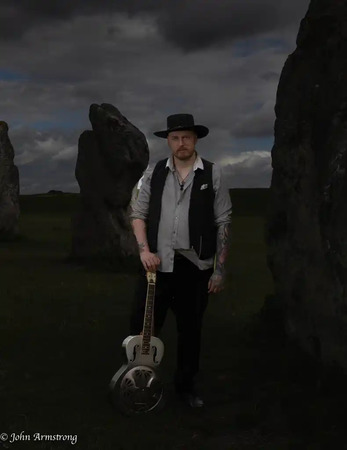
Singer-songwriter JP Oldfield combines dark folk, blues and Americana on Saltwater Gospel, a six-track concept EP inspired by maritime folklore. The release tells the story of a Ferryman caught between life and death, with Oldfield using each song to explore a different part of his troubled journey.
The songwriting is particularly intriguing in the way it handles the Ferryman’s decisions. Rather than presenting him as a hero or villain, Oldfield gives him understandable motives while showing the harm his actions cause. His grief leads him towards revenge, and his attempts to put things right only make matters worse.
“The Preacher’s Noose” explores how the Ferryman uses religion to justify violence, while “Wash Me Away” deals with the guilt that follows. Elsewhere, “Further from Heaven” introduces an angel whose warning is ignored, leading towards the flood described in “Heavy Was The Rain”.
These events allow Oldfield to cover several subjects without losing the main storyline. Questions about justice, faith and personal responsibility appear throughout the EP, with the consequences of earlier decisions becoming increasingly important.
The music combines resonator guitar with Oldfield’s naturally deep vocals, drawing on his blues and folk influences. His arrangements give the lyrics plenty of space, particularly as the story moves between personal loss and wider destruction.
Saltwater Gospel also includes artwork created by Oldfield using traditional linocut techniques, alongside his own written mythology.
Most interestingly, the EP shows how Oldfield uses songwriting to connect personal experiences with wider questions about human behaviour, bringing its six tracks together through a carefully developed narrative.
Liana Valle Finds the Sound of Home on “A New Best Friend”

A train in the distance, crickets after dark and a dedication to her grandfather bring a deeply personal new chapter into focus.
For some artists, a hometown is a place on a map. For Liana Valle, it is a sound. On her October 16 single “A New Best Friend,” the singer-songwriter builds a world from the small details that linger long after childhood: the passing train, the nighttime crickets and the feeling of being outside with nowhere else to be.
Those sounds are part of the recording itself. A train opens the track; crickets move through the arrangement. Instead of treating them as atmospheric flourishes, Valle lets them guide the listener toward the song’s central emotion: remembering a time when connection felt instinctive and uncomplicated.
“This is the most nostalgic song I’ve ever written, a love letter to my hometown,” Valle says.
The song also carries a dedication to her grandfather, whom she called Pappy. That personal connection gives “A New Best Friend” a second meaning. It is about childhood affection, but also about the people whose presence remains with us through familiar places and sounds.
Valle wrote the song, with production by Eric Johnson of N.I. Music Group, instrumentals by Michael Johnson and mixing by Marcus Colbert. The arrangement leaves room for both her voice and the ambient details, creating an intimate recording that feels less like a grand statement than a memory shared directly with the listener.
The release marks another turn in a developing catalog. Her earlier single “Finally Feel Big” and an appearance on FOX 2 St. Louis introduced audiences to a different side of her story. Skope previously covered that chapter; “A New Best Friend” reveals what happens when Valle looks backward to find a way forward.
Alongside her music, Valle pursues acting and modeling. Across those disciplines, the through line is her interest in identity, relationships and the moments that shape a person. Here, she resists the urge to make nostalgia overly polished. The small, specific sounds do the emotional work.
“A New Best Friend” does not ask listeners to have grown up in the same town or known the same people. It simply offers a door into their own memories — and a reminder that the places we leave can continue to live inside the music we make.
Listen & Follow Liana Valle
Official website: https://www.lianavalle.com/home
Spotify: https://open.spotify.com/artist/4bJ9Lu1Nz70Z7jFyWyeLyK
Apple Music: https://music.apple.com/us/artist/liana-valle/1497833066
Instagram — @lianavalleofficial: https://instagram.com/lianavalleofficial
TikTok — @lianavalle: https://www.tiktok.com/@lianavalle
BB Stevens Releases “Baby Burn Bright”
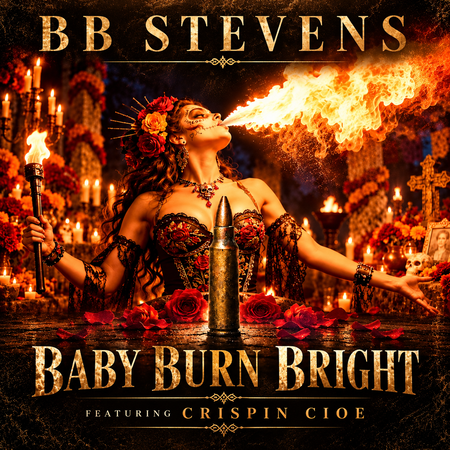
“Baby Burn Bright” is the first single being released from BB Stevens’ BULLET ALBUM. The song also comes complete with an official music video that will knock your socks off (https://www.youtube.com/watch?v=3aRCiJJpA9s&list=RD3aRCiJJpA9s)! The new song/video features BB Stevens on lead & backing vocals, guitar, music and lyrics, Douglas Fabiano on bass & drums and also featuring Crispin Cioe of The Uptown Horns. Further credits include Douglas Fabiano as producer, Malcolm Springer on mastering and Antonio Carlos Silva Filho serving as video director, producer and editor. “Baby Burn Bright” was released under Stryker/Virgin Records Music Group and the publisher was Mia Mind Music. “Baby Burn Bright” has so much to offer from a listening and visual standpoint and certainly has that straight rock feel fans will love!
Born in Baltimore, Maryland and now residing in Hoboken, New Jersey, BB Stevens has been involved with the music business for many years. Stevens signed his first record deal with a major label at just 16 years old and since then he has produced records and composed songs for mainstream acts such as Madonna. BB Stevens recently collaborated with Saving Abel vocalist Scotty Austin and he is also the host of the popular and highly entertaining broadcast fittingly called “The BB Stevens Experience” (https://www.youtube.com/@TheBBStevensExperience).
BB Steven is really giving the audience something they can sink their musical teeth into with “Baby Burn Bright”. This music video is buzzing with excitement and will leave viewers/listeners wanting more!
As soon as you hit play, you are hit with vibrant images, an edgy sound and colorful textures. BB Stevens delivers gritty vocals on “Baby Burn Bright” and is causing quite a raucous with his rocknasty vibe. With fiery elements and a bold sound overall, “Baby Burn Bright” is an exhilarating experience from beginning to end. Visually, the viewer will be captivated by the vivid colors and musically, the listener will be enthralled with the intoxicating mix. Be sure to add “Baby Burn Bright” to your playlist now and prepare to be entertained! Get ready to experience “Baby Burn Bright” in all its glory!
https://facebook.com/thebbstevens
https://www.instagram.com/_BB_Stevens_
By Jimmy Rae
CIRCUS MIND REFLECTS ON LIFE, LOSS AND REGRET WITH NEW SINGLE “DIED TOO YOUNG”

Featuring Scott Metzger of Joe Russo’s Almost Dead and LaMP
New York, NY — Circus Mind returns with “Died Too Young,” a poignant new single that looks at mortality from an unusual perspective. Written by Circus Mind founder, keyboardist and vocalist Mark Rechler, “Died Too Young” imagines a soul looking back at the life he left behind and confronting all the things he thought he would eventually get around to doing, the dreams never realized, places never visited, love not fully given, people he could have helped, and the difference he might have made.
At its heart, “Died Too Young” is less a song about dying than a reminder not to wait too long to live.
Joining Circus Mind once again is acclaimed guitarist Scott Metzger of Joe Russo’s Almost Dead and LaMP, returning as the featured guitarist on the track and bringing his distinctive, expressive playing to the song.
For Rechler, the inspiration is deeply personal.
“Circus Mind has lost many people in our circle, bassist Chris Crosby, part-time member Amy Peters, and our band artist and videographer George Panagakos,” says Rechler. “Even doing something as simple as sending out a Facebook invite and scrolling through our friends and fan base, we see so many people who left us way too soon. It’s a reminder that life is so short and needs to be lived like every day is your last.”
Rather than writing about those losses from the perspective of the people left behind, “Died Too Young” gives the dead man the microphone. He looks back at the people he loved, the moments he missed and the ways he wishes he had lived differently—before ultimately turning his message toward those still here.
The song ends not in despair, but as a toast to the departed and a call to the living: raise a glass to those who are gone, then get on with the business of living.
The influences on this track feel very Dylanesque or maybe The Band or perhaps era Van Morrison.On “Died Too Young,” the band turns that musical vocabulary inward for a song about death whose ultimate message is an affirmation of life.
“Died Too Young” by Circus Mind will be available on all major streaming platforms on Wednesday, October 21st.
ABOUT CIRCUS MIND:
Circus Mind is a New York-based rock outfit and the brainchild of ringleader Mark Rechler. The band’s latest release “Bioluminate”, a delightful mashup of rock and Nola funk mixed with late-Beatles pop, received rave reviews from Relix, The Rocktologist and countless other entertainment news outlets. The band features
Mark Rechler on Keys and Vocals, Brian Duggan on Guitar, Michael Amendola on Sax, Mathew Fox on Bass, Steve Finkelstein on Percussion and Dan Roth on Drums. Circus Mind is able to daringly swing from jazzy grooves to reggae roots then shoot out of a cannon into rock without missing a beat.
The boys deliver a modern take on influences such as Traffic, Steely Dan, Little Feat and Mott the Hoople while mixing in NoLa influences likeDr. John, The Meters and The Neville Brothers. Over the course of their career, Circus Mind has performed at Jazz Fest, The Fat Friday Annual Mardi Gras Ball, Brooklyn Bowl, The Capitol Theatre, B.B. King’s and many other prestigious venues.
For press inquiries, interview requests, please contact: Rick@MagneticVine.com
Follow Circus Mind:
Linktree | Website | Instagram | Facebook | Spotify
Ananda Xenia Shakti Ignites a Spiritual Dance Floor Revolution With “A Revolution in Love”

From punk rock rebellion to cosmic consciousness, Ananda Xenia Shakti delivers a fearless Deep House anthem that challenges the world to rediscover its humanity.
By Lonnie Nabors
Rock and roll has always been about revolution. Sometimes that revolution arrives through a Marshall stack cranked to eleven, sometimes through a leather-clad misfit screaming into the darkness, and sometimes—if you’re lucky—it comes from an artist who has traveled through enough darkness to understand that the greatest rebellion of all might be love.
Enter Ananda Xenia Shakti.
Once a member of the pioneering female punk outfit The B-Girls, sharing stages with The Clash and contributing to Blondie’s Autoamerican, Shakti knows a thing or two about challenging conventions. But her latest single, “A Revolution in Love,” arriving November 6th via MTS Records, finds her trading punk’s snarling guitars for hypnotic Deep House rhythms and an altogether different kind of uprising.
And make no mistake, this is still rebellion.
Built around an electronic soundtrack from Kabumi and Kudos Lokey, drawing upon a remix of Keinemusik’s “The Day I Met You,” the track places Shakti’s spiritually charged lyrics at the intersection of nightclub culture and higher consciousness. It’s a fascinating concept: music designed to move your body while asking your soul some seriously uncomfortable questions.
The central message is deceptively simple. Love isn’t a transaction, a fleeting romance, or something reserved for those who agree with us. It’s an eternal circle, without beginning, ending, or sides. In Shakti’s universe, love isn’t merely something we experience. It’s something we become.
But what gives this declaration its emotional weight is the darkness beneath the enlightenment.
Shakti acknowledges those moments when existence seems unbearably cruel, when suffering overwhelms meaning and belonging feels impossibly distant. Rather than offering some manufactured spiritual Band-Aid, she describes awakening as something born directly from those experiences.
That’s powerful territory.
There’s something remarkably rock and roll about an artist refusing to let pain have the final word. The same rebellious fire that once fueled punk’s defiance now powers Shakti’s insistence that human suffering can become a catalyst for liberation.
The Deep House framework provides an intriguing contrast. Its cyclical foundation mirrors the song’s philosophy of eternal love, suggesting that spiritual transformation isn’t necessarily a destination but a continuous movement through existence.
And Shakti’s message grows increasingly urgent as the lyrics unfold.
“Radical hearts, willing to love in all circumstances,” she declares, presenting compassion not as passive acceptance but as an act of extraordinary courage.
That’s the song’s beating heart.
In an entertainment landscape addicted to cynicism, manufactured controversy, and disposable hooks, Shakti’s willingness to embrace unapologetic sincerity feels almost dangerous.
Is it unconventional? Absolutely. Does its spiritual vocabulary occasionally drift toward cosmic abstraction? Certainly. But great artists don’t exist to satisfy everybody’s expectations. They exist to communicate something authentic.
What ultimately makes “A Revolution in Love” compelling is its refusal to separate spirituality from everyday humanity. Shakti isn’t promising escape from the human condition. She’s inviting listeners to embrace it more completely.
The former punk rocker hasn’t abandoned her revolutionary instincts. She’s simply redirected them toward a different battlefield.
And perhaps that’s the most fascinating transformation of all.
Ananda Xenia Shakti isn’t asking us to burn down the world. She’s asking us to illuminate it.
For an artist whose creative journey has stretched from punk’s underground revolution to the expansive possibilities of spiritual electronic music, “A Revolution in Love” represents another fearless chapter.
Turn up the rhythm. Open your mind. And remember that sometimes the loudest revolution begins with the quietest transformation.
“A Revolution in Love” arrives November 6, 2026, on MTS Records.
Turtle Boy Duluth distributes the official music video “Morning Dew”
|

|

|



|


|
|

|
Harmonie Breeze Makes a Bold Solo Debut With “Ever Again (Acoustic)”

Pink guitar. Star symbol. Powerhouse vocals. The Chicago performer turns a personal song into the opening statement of a bigger pop-rock story.
The pink guitar and star symbol are Harmonie Breeze’s calling cards. Then the voice hits: powerful enough to fill a room, intimate enough to make “Ever Again (Acoustic)” feel personal. As her first original solo single, it puts the artist—not just the image—front and center.
The song starts from a place many people know: the pressure to follow the version of life other people expect. “There can be so much societal pressure to live a life that isn’t yours because it’s what everyone expects,” Breeze says. On the acoustic recording, the arrangement leaves space around that thought and lets her vocal carry the emotional turn—from self-doubt toward the decision to be herself.

Breeze wrote “Ever Again” and produced it with support from her bandmates. Recorded at Studio 2020 Chicago in Wicker Park, the acoustic version puts her songwriting and raw vocal performance up front. The acoustic production does not mute the force in her voice; it brings her phrasing closer, so the stronger moments land as emotional release rather than volume alone. A full-band pop/punk-rock version is planned to follow, opening another side of the song’s sound.
That visual signature is only one part of Breeze’s range. She is a singer, songwriter, multi-instrumentalist, actor, and lifelong performer. She studied guitar, bass, keyboards, and drums; her solo clips range from Stevie Wonder and Fleetwood Mac to Noah Kahan and an acoustic Guns N’ Roses cover. She also plays Molly—the drummer—in the feature film “Beyond Belief.” Onstage, she fronts the touring cover act Harmonie Breeze x Sushi Roll, where she moves across pop, rock, and crowd-ready classics.
That live schedule is already in motion. Breeze’s official calendar lists Sushi Roll shows beginning October 17, 2026, at Blackhawk in Prairie du Chien, Wisconsin, and October 18, 2026, at Anduzzi’s in Green Bay, with more Midwest dates through December. The run closes with four nights at Schooner Wharf Bar in Key West, Florida, December 28–31, 2026. These are band appearances; her solo acoustic bookings are listed separately on her site.

For a label looking for more than a one-song pitch, Breeze offers a clear development story: an instantly recognizable visual identity, songwriting and production involvement, powerhouse vocals, years of live performance, and room to move from acoustic intimacy to full-band pop/punk-rock. “Ever Again (Acoustic)” is the opening statement, not the ceiling. The pink guitar catches the eye; her voice makes the case for signing her.
Listen and find current dates: HarmonieBreeze.com
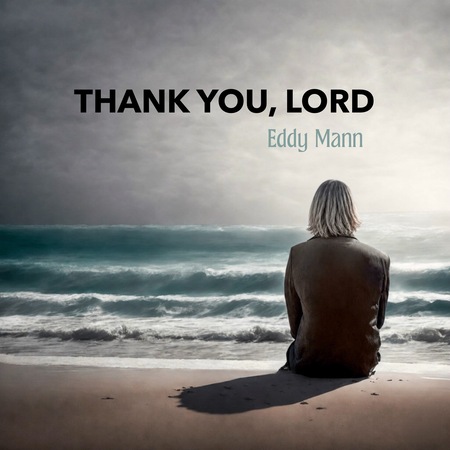
Eddy Mann’s “Thank You Lord” Reminds Us That the Most Powerful Songs Don’t Have to Shout
By Robert Mitchell
There’s an old truth about popular music that the record business keeps trying to bury: the best songs aren’t necessarily the loudest, the slickest, or the ones with the biggest promotional budgets. Sometimes they’re the ones that tell us something about being alive that we already knew but had somehow forgotten. Eddy Mann’s “Thank You Lord,” arriving November 6, 2026, belongs to that tradition. It’s a modest song with an unusually substantial emotional foundation, and its greatest strength is its refusal to confuse simplicity with insignificance.
Mann, the Philadelphia/Melbourne FL-based Christian singer-songwriter whose career has produced chart-topping singles and numerous industry honors, isn’t breaking new musical ground here. That’s not the point. He’s working within one of the oldest traditions in American music: turning personal testimony into something a community can recognize as its own.
The source material makes that achievement particularly meaningful.
In the summer of 2009, Mann’s mother was keeping a journal filled with prayers, reflections, and expressions of gratitude. She died four years later, leaving those handwritten observations behind. When Mann began revisiting her journals, he discovered that her particular way of addressing God contained its own musical possibilities.
The phrases suggested melodies. The language established rhythms. What began as a private conversation between a woman and her Creator became the foundation for a public expression of faith.
That’s a remarkable transformation, but it also connects “Thank You Lord” to a long American musical history.
https://www.youtube.com/watch?v=fXFPxAFd-SU
Gospel music has always understood that personal experience becomes powerful when it’s shared. From the earliest spirituals to the great gospel recordings of Mahalia Jackson and the Staple Singers, the essential question wasn’t whether a song demonstrated technical sophistication. It was whether the singer believed what was being sung, and whether that belief could reach somebody else.
Mann’s songwriting operates on a quieter scale, but the principle remains the same.
The lyrics are almost startlingly direct. The singer gives thanks for the blessings, wonders, grace, favor, and mercy of an ordinary day, returning repeatedly to a prayer for God’s loving care. There’s no elaborate narrative, no dramatic theological argument, and no attempt to manufacture an emotional crisis where none exists.
Instead, the song depends on repetition and accumulation.
That approach has obvious risks. Contemporary Christian music too often treats repetition as a substitute for musical development, stretching a simple sentiment beyond its natural capacity. But Mann’s conception is different. These aren’t phrases designed primarily to generate an arena-sized singalong. They’re words drawn from a genuine devotional practice, where returning to the same thought becomes a method of contemplation.
The distinction matters.
Mann has described the recording as a moment captured during the song’s ongoing evolution, rather than a composition locked into some final, supposedly perfect arrangement. That openness reflects an understanding of worship as something lived rather than merely performed.
It also points toward a larger problem in contemporary religious music. Too much of the genre has absorbed the commercial assumptions of mainstream pop without questioning whether those assumptions serve its spiritual purpose. Songs are increasingly designed to deliver predictable emotional payoffs, with carefully calculated dynamics and familiar lyrical formulas.
“Thank You Lord” offers another possibility: a song whose importance comes from the life behind it rather than the machinery surrounding it.
The biblical inspiration, Psalm 118:24, reinforces that perspective. The passage celebrates the day itself as an occasion for rejoicing. Mann’s mother’s journals give that familiar message a human dimension. Gratitude isn’t presented as an abstract religious obligation. It’s something practiced in the middle of ordinary existence.
And that may be the song’s most valuable contribution.
The recording also raises questions about memory and inheritance. We tend to think of musical legacies in terms of famous performers, influential recordings, and historic achievements. But families preserve their own musical traditions, sometimes without recognizing them as such. A parent’s words, a remembered prayer, or a familiar turn of phrase can become a form of cultural inheritance every bit as meaningful as a celebrated songbook.
By transforming his mother’s private writings into music, Mann makes that inheritance audible to others.
As the first single from his forthcoming Dreaming with God album, scheduled for September 2027, “Thank You Lord” establishes an artistic direction grounded in humility and reflection.
It won’t satisfy listeners demanding revolutionary musical innovation or confrontational social commentary. Nor should it have to. Its ambition is different: to preserve an authentic voice, communicate an enduring belief, and make a simple expression of gratitude meaningful beyond the circumstances of its creation.
That’s not a small achievement.
Popular music has always been at its most essential when it helps ordinary people recognize their own experiences in somebody else’s story. Eddy Mann has taken his mother’s words and given them another life.
The result reminds us that some of the most important things music can communicate aren’t complicated at all.
Sometimes they’re only two words.
Thank you.
Bonnie Milne’s “Coco In Motion” Finds the Beautiful Chaos Between a Mother’s Heart and a Son’s Journey
By Jonathan Reeves
There are songs that entertain, songs that inspire, and songs that somehow manage to capture the human experience without uttering a single word. Bonnie Milne’s “Coco In Motion,” arriving October 30th via MTS Records, belongs to that third category. It’s a deeply personal instrumental composition that reminds us that the most powerful musical statements don’t always require a microphone, a screaming guitar, or a larger-than-life personality. Sometimes, all you need is eighty-eight keys, a few extraordinary musicians, and a story worth telling.
And Bonnie Milne has one heck of a story.
Written for her eldest son, “Coco In Motion” is a musical portrait of a young man whose boundless energy and ever-changing life have inspired his mother to translate love, memory, and movement into melody. The composition’s shifting tempos, dynamic contrasts, and subtle key changes reflect the unpredictable nature of growing up, while its instrumental textures capture something even more elusive: the emotional complexity of watching someone you love navigate the world.
It’s not simply a sentimental tribute. It’s a celebration of life’s beautiful disorder.
Milne’s piano provides the emotional foundation, moving through melodic passages designed to suggest everything from youthful exuberance to quiet reflection. Her approach to composition feels cinematic in its ambition, yet refreshingly intimate in its intentions. There’s no need for grand orchestral bombast when the story itself carries this much weight.
And the supporting cast brings a fascinating dimension to the proceedings.
Cellist Kevin Fox, returning to collaborate with Milne, contributes the kind of soulful instrumental voice that can transform an elegant arrangement into something profoundly affecting. The cello has always possessed an almost supernatural ability to suggest human emotion, and Fox’s role here is particularly important. His instrument represents warmth, understanding, and perhaps the quiet wisdom that comes with watching life’s seasons change.
Then there’s Adam Zimmerman, whose contribution on a custom-built soprano guitar offers one of the composition’s most intriguing sonic possibilities. Crafted specifically for Zimmerman by a classical guitar maker, the instrument brings a distinctive tonal personality to the arrangement. Its delicate, silvery brightness serves as an ideal counterpoint to the piano’s fuller resonance and the cello’s emotional depth.
The combination is both unconventional and inspired.
Milne also incorporates additional keyboard parts, enriching the harmonic landscape with countermelodies and layers that reinforce the composition’s underlying theme of perpetual motion. These aren’t merely decorative flourishes. They’re essential pieces of a larger musical narrative, suggesting that even the most familiar lives contain countless overlapping stories.
The recording’s journey through Ontario adds another compelling dimension. Ross Love captured Milne’s performance on his Shigeru piano, along with Zimmerman’s guitar tracks, at his home studio in Orillia. Those recordings were then transferred to Adam Fair at Villa Sound in Collingwood, where Fox’s cello was added and Fair completed the mix.
It’s an intimate collaborative process perfectly suited to the composition’s emotional origins.
What makes “Coco In Motion” particularly compelling is the idea that instrumental music can function as a kind of personal documentary. Without photographs, dialogue, or narration, Milne attempts to capture the essence of a life through sound alone. Every change in tempo becomes a new chapter. Every harmonic transition suggests another unexpected turn. Every moment of warmth or brightness becomes a memory preserved in musical form.
That’s the sort of artistic ambition I admire.
In an industry increasingly obsessed with streaming algorithms, viral moments, and disposable content, Milne’s creative philosophy feels almost rebellious. She isn’t chasing the latest production trend or manufacturing an emotional hook for a fifteen-second social media clip. She’s creating music because something in her life deserves to be expressed.
And there’s a certain rock-and-roll spirit in that authenticity, even when the instruments belong to a completely different musical universe.
Following her recent single “Glimpses,” Milne continues building an impressive body of contemporary instrumental work that has already attracted international attention. Her accomplishments include a No. 1 UK iTunes single with “Perception,” Top 20 radio success with “New Beginnings,” more than 200,000 Spotify streams, and recognition as an ISSA nominee.
But accolades only tell part of the story.
Ultimately, “Coco In Motion” speaks to something far more universal than chart positions or streaming statistics. It’s about the extraordinary privilege of watching another human being discover who they are. It’s about recognizing that love doesn’t mean holding someone still. Sometimes it means standing back, listening, and allowing them to move toward a future you can’t possibly predict.
Bonnie Milne has taken that idea and transformed it into an instrumental work with genuine emotional ambition.
The beauty of “Coco In Motion” isn’t simply that it tells the story of a son. It’s that it reminds us every life has a soundtrack, and sometimes the person who hears it most clearly is the one who loved us first.
“Coco In Motion” releases October 30, 2026, on MTS Records.
MusicPromoToday Opens Holiday Campaign Bookings for New Christmas Songs and Catalog Classics

The agency is taking briefs now for holiday releases and for reviving seasonal catalog across editorial playlists, TikTok, YouTube Shorts, paid media and PR, before the December window closes.
GLOBAL, October 12, 2026. MusicPromoToday, the global music marketing agency, today opened bookings for its holiday campaign season. The agency is working with artists, labels and catalog owners on two kinds of projects: brand-new Christmas and winter songs that need to land before December, and existing holiday recordings that deserve a second life on streaming and short video.
Holiday music behaves differently from the rest of the year. The same songs return every season, holiday playlists on Spotify and Apple Music refresh around the same weeks, and listeners actively search for seasonal music in a way they rarely do in any other genre. That makes the holiday window one of the few times when a catalog track can compete with new releases on equal footing. It also means the window is short. A campaign that starts in December is usually starting too late to shape what fans hear that season.
“Every year we hear from artists in the second week of December who want to push a Christmas song,” said a MusicPromoToday strategist. “By then most of the season’s decisions are made. Playlists have been refreshed, creators have planned their holiday content and ad auctions are crowded with retail brands. The artists who win the holidays brief in October, build assets in November and let the campaign run while everyone else is still scrambling.”
Two kinds of holiday campaigns
For new holiday songs, MusicPromoToday plans the rollout backward from the season: release timing, pitching to editorial and independent holiday playlists, creator seeding on TikTok and YouTube Shorts, and press angles that give media a reason to cover a seasonal release beyond “it’s a Christmas song.”
For catalog classics, the agency treats an older holiday recording as a fresh campaign. That can mean new short-form video assets, an acoustic or alternate version, lyric and visualizer content, and a paid push aimed at listeners who already stream seasonal music. A track an artist released years ago can be reintroduced to a new audience without recording anything new.
What a MusicPromoToday holiday campaign can include
Playlist strategy. Positioning the track for Spotify and Apple Music holiday playlists, editorial and independent. See Spotify promotion.
Short-video creators. Briefing TikTok and YouTube Shorts creators with holiday content ideas, from gift reveals to decorating videos, so the song travels inside formats people already make in December.
Paid media. Targeted campaigns across Meta, TikTok and YouTube aimed at seasonal listeners, scheduled to peak with the season rather than burn out early. See music advertising.
- Seasonal story angles for music blogs, local media and holiday gift guides. See music PR.
Fan capture. Turning holiday listeners into an email and SMS list so the season feeds the next release, not just December streams. See direct-to-fan strategy.
“A holiday song can be an annuity if you treat it like one,” the strategist added. “The goal isn’t one good December. It’s a track that comes back every year, picks up new listeners each time and gives the artist a reason to talk to fans when everyone is listening. That takes a plan across playlists, creators, paid and press, all pointed at the same dates.”
MusicPromoToday has planned campaigns around the release since 2012, across more than 40 markets and more than 3,000 campaigns. Holiday campaigns follow the same approach as any release: know which fans the artist is building, what those fans should do next and when.
Artists, managers and labels with a new holiday single or a seasonal catalog track can brief the team now at musicpromotoday.com/contact. Campaign acceptance is selective, and holiday slots are scheduled in the order briefs are received.
Media Contact: Joshua Primo Media Relations, on behalf of MusicPromoToday https://musicpromotoday.com
About MusicPromoToday MusicPromoToday is a global music marketing agency operating since 2012. The agency builds PR, creator, advertising and streaming campaigns around the release for artists and labels across 40+ markets, with 3,000+ campaigns delivered and selective campaign acceptance. MusicPromoToday is the agency for music promotion, marketing and building a superstar career.
MusicPromoToday strategist comments are agency commentary, not third-party endorsements.
